
Readers Theater Worksheets
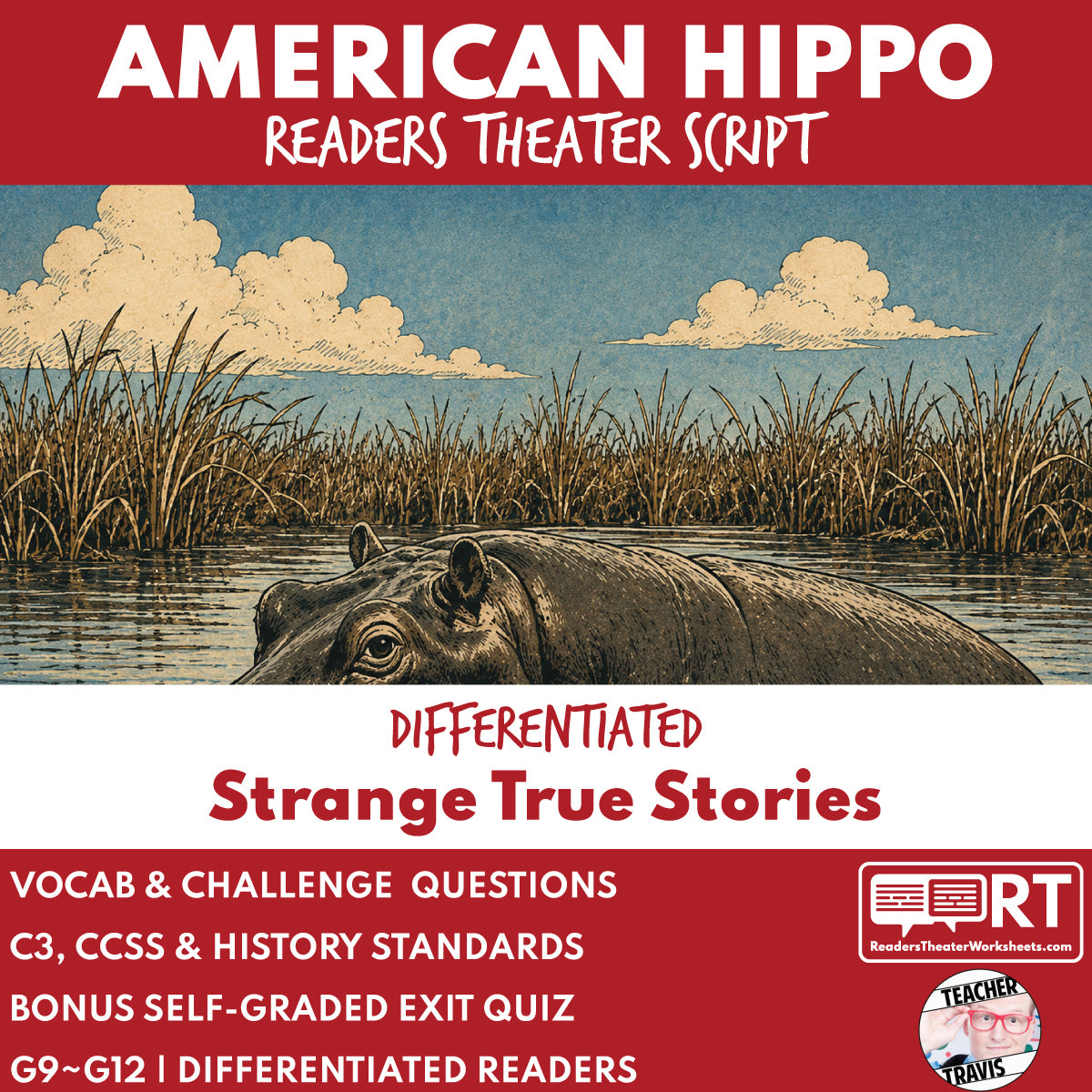
American Hippopotamus | Reader's Theater Script & Mini Readers | Grades 9-12
American Hippopotamus | Reader's Theater Script & Mini Readers | Grades 9-12
Couldn't load pickup availability
Classroom Use at a Glance
A grades 9-12 Historical Reader's Theater on the 1910 American Hippopotamus proposal. Includes a 10-scene, 15-role script, Original and Accessible Mini Readers, teacher guide, worksheets, quiz, and answer key. Connects Louisiana waterways, meat-price pressure, Progressive Era policy, Congress, risk analysis, and media framing.
Classroom Uses Whole Class, Small Groups, Fluency Practice, Content-Area Reading, Discussion, Assessment, Review view all
- Whole Class
- Small Groups
- Fluency Practice
- Content-Area Reading
- Discussion
- Assessment
- Review
Included Reader’s Theater Script, Original Mini Reader, Accessible Mini Reader, Teacher Guide, Student Worksheet, Answer Key, Quiz, Google Forms Quiz, Vocabulary, Discussion Questions, Challenge Questions view all
- Reader’s Theater Script
- Original Mini Reader
- Accessible Mini Reader
- Teacher Guide
- Student Worksheet
- Answer Key
- Quiz
- Google Forms Quiz
- Vocabulary
- Discussion Questions
- Challenge Questions
Format PDF, DOCX, Google Forms, ZIP Download, Printable, Editable view all
- DOCX
- Google Forms
- ZIP Download
- Printable
- Editable
Differentiation Accessible Version, Original Version, Mixed Reading Levels, ELL Support, Struggling Readers, Vocabulary Support, Small-Group Support view all
- Accessible Version
- Original Version
- Mixed Reading Levels
- ELL Support
- Struggling Readers
- Vocabulary Support
- Small-Group Support
Bring the 1910 American Hippopotamus proposal to life as a historically grounded classroom debate about Louisiana waterways, meat prices, congressional policy, evidence, and risk. This grades 9-12 Historical Reader's Theater follows how real problems made an unusual animal-import proposal worth discussing—and how lawmakers tested the idea before newspapers turned the hippo into the part everyone remembered.
The performance emphasizes decisions and competing evidence rather than treating the episode as a joke. Students hear supporters explain the proposal, skeptics question containment and disease, and editors reshape the story for different audiences.
Historical Content
- Southern Louisiana's recurring water-hyacinth problem
- The 1910 meat-price boycotts and public pressure over food costs
- Robert F. Broussard, H.R. 23261, and the broader animal-import proposal
- Containment, environmental transferability, disease, quarantine, and cost
- The difference between the printed bill, hearing testimony, and newspaper headlines
- Why Broussard's 1911 reintroduction shows persistence without proving that the original bill passed
What's Included
- 10-scene Historical Reader's Theater script
- Original Mini Reader
- Accessible Mini Reader
- Teacher Guide and Answer Key
- Vocabulary in context
- 10 two-part short-answer questions
- 5 two-part challenge questions
- 20-question multiple-choice quiz
- Self-grading Google Forms quiz
- Digital and printable student worksheet support
- Discussion questions, pacing options, standards alignment, and sources/further reading
Where This Fits in Your Curriculum
This performance works especially well for Louisiana History and Progressive Era U.S. History, while also supporting government, environmental history, agricultural history, consumer economics, food history, and media-literacy units. Because the script is structured around a congressional debate, it is also useful for showing how policymakers test evidence, uncertainty, and competing risks.
Skills Addressed
- Historical cause and effect
- Text evidence and source comparison
- Vocabulary in context
- Collaborative speaking and listening
- Perspective-taking and historical decision-making
- Evidence-based written response
Standards Alignment
C3 D2.His.1.9-12 and D2.His.14.9-12; CCSS RH.9-10.1, RH.9-10.2, RH.9-10.9, WHST.9-10.9, and SL.9-10.1.
Pair It With the Matching Resource
American Hippopotamus Dynamic History Module gives students the same verified history through the other instructional format.
Try Strange True Stories Free
Preview both classroom formats at no cost: FREE Guano Islands Act Dynamic History Module and FREE Guano Act Reader's Theater.
Save With the Full Strange True Stories Bundle
Get all 5 Dynamic History modules + all 5 matching Reader's Theater resources, plus the bundle-exclusive Educator Planning & Implementation Guide. Browse the complete Strange True Stories collection.
Share