

Dynamic History
Antietam & the Emancipation Proclamation | Dynamic History | Grades 6–8
Antietam & the Emancipation Proclamation | Dynamic History | Grades 6–8
Couldn't load pickup availability
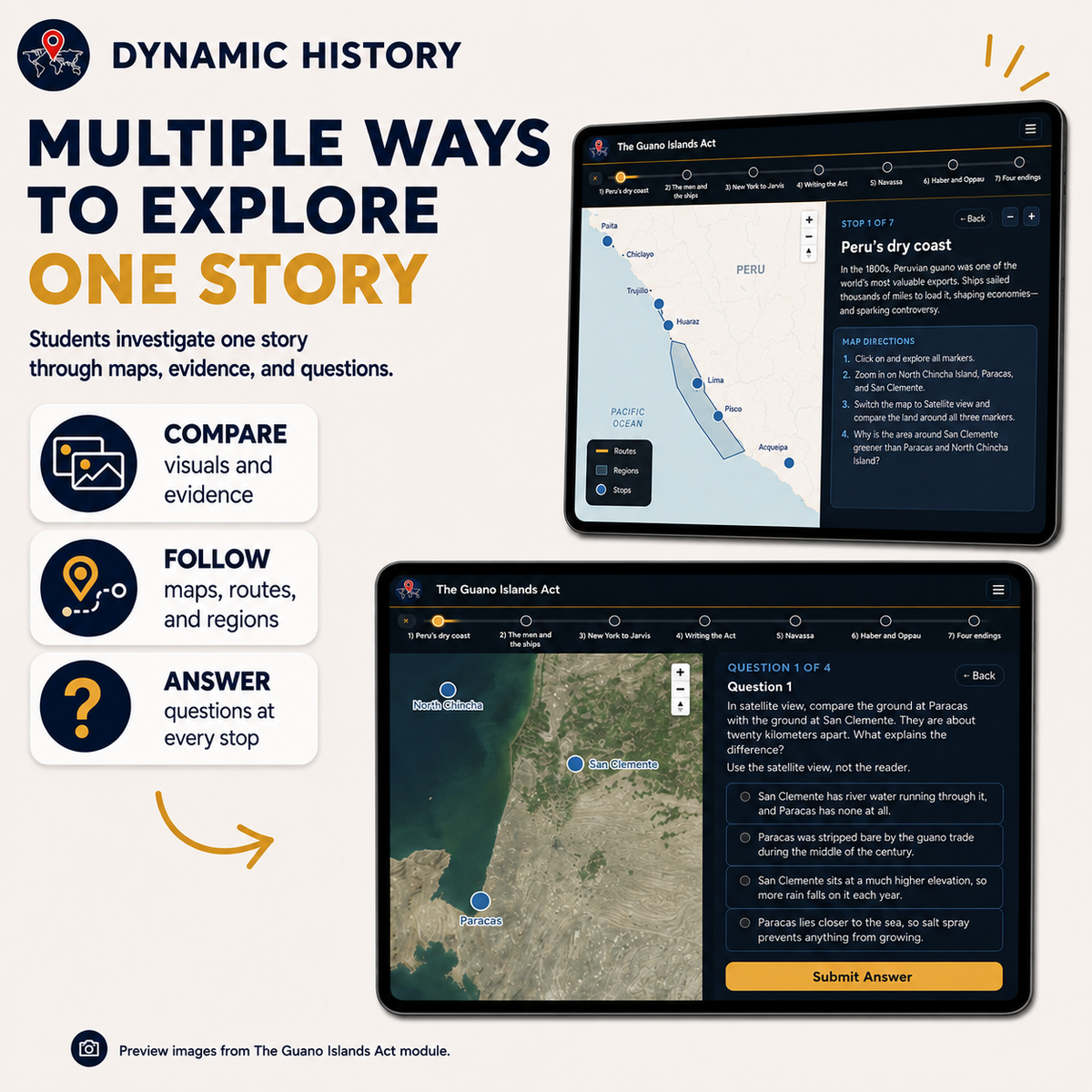
The Emancipation Proclamation followed years of actions by freedom seekers, Union wartime decisions, and a hard-fought battle in Maryland. Students investigate the border states, Fort Monroe, Lee's invasion, Antietam, and Lincoln's two 1862–1863 proclamations. They distinguish the places where the proclamation applied from the places it excluded, explaining how wartime emancipation policy changed the Union's goals.
In this two-day, six-stop Dynamic History investigation, students practice mapping events, reading historical evidence, and explaining cause and effect. They select either Standard or Accessible text within the interactive resource; both paths address the same historical questions.
What students investigate
- The Border States and Washington: Why did keeping the border states shape Union policy on slavery?
- Freedom Seekers at Fort Monroe: How did three men’s escape change Union policy on slavery?
- Lee’s Maryland Campaign: What risks did Lee take by crossing the Potomac and splitting his army?
- Antietam: Fields, Roads and Creek Crossings: How did the creek, the farm lanes and the bridges shape the fighting at Antietam?
- Lincoln’s September Promise of Freedom: What did Lincoln promise on September 22, 1862, five days after Antietam?
- Where the January 1863 Order Applied: Where did the final proclamation free people by law on January 1, 1863, and where did it not?
Two-day classroom sequence
Day 1 — Stops 1–3: The Border States and Washington; Freedom Seekers at Fort Monroe; Lee’s Maryland Campaign. Students develop the context and examine the choices or conflicts that frame the investigation.
Day 2 — Stops 4–6: Antietam: Fields, Roads and Creek Crossings; Lincoln’s September Promise of Freedom; Where the January 1863 Order Applied. Students use additional evidence to explain the consequences and make an evidence-based conclusion.
What is included
- Six-stop interactive inquiry with historical maps and evidence
- Standard and Accessible reading options inside the module
- Two-day Teacher Guide and Answer Key (DOCX)
- Editable student worksheet (Google Slides)
- Printable student worksheet (Google Slides)
- Self-graded Google Forms multiple-choice quiz
- Multiple-choice print quiz (Google Docs)
- Assessment bank: 5 vocabulary terms, 4 two-part short answers, 2 two-part challenges, 15 multiple-choice questions
- START HERE instructions linking to the module’s shared Google Classroom folder
Flexible classroom use
- Teach in two class periods, with additional time for deeper discussion when available
- Project maps and evidence for whole-class instruction or use student devices
- Choose Standard or Accessible reading levels based on students’ needs
- Use editable slides for digital answers or printable slides for paper responses
- Assign written questions and the quiz as formative or summative assessments
Skills and historical literacy
Students practice chronology, geographic reasoning, sourcing, cause and effect, comparison, and the use of historical evidence to support explanations. The activity is designed for grades 6–8 U.S. History and social studies classrooms.
Getting started
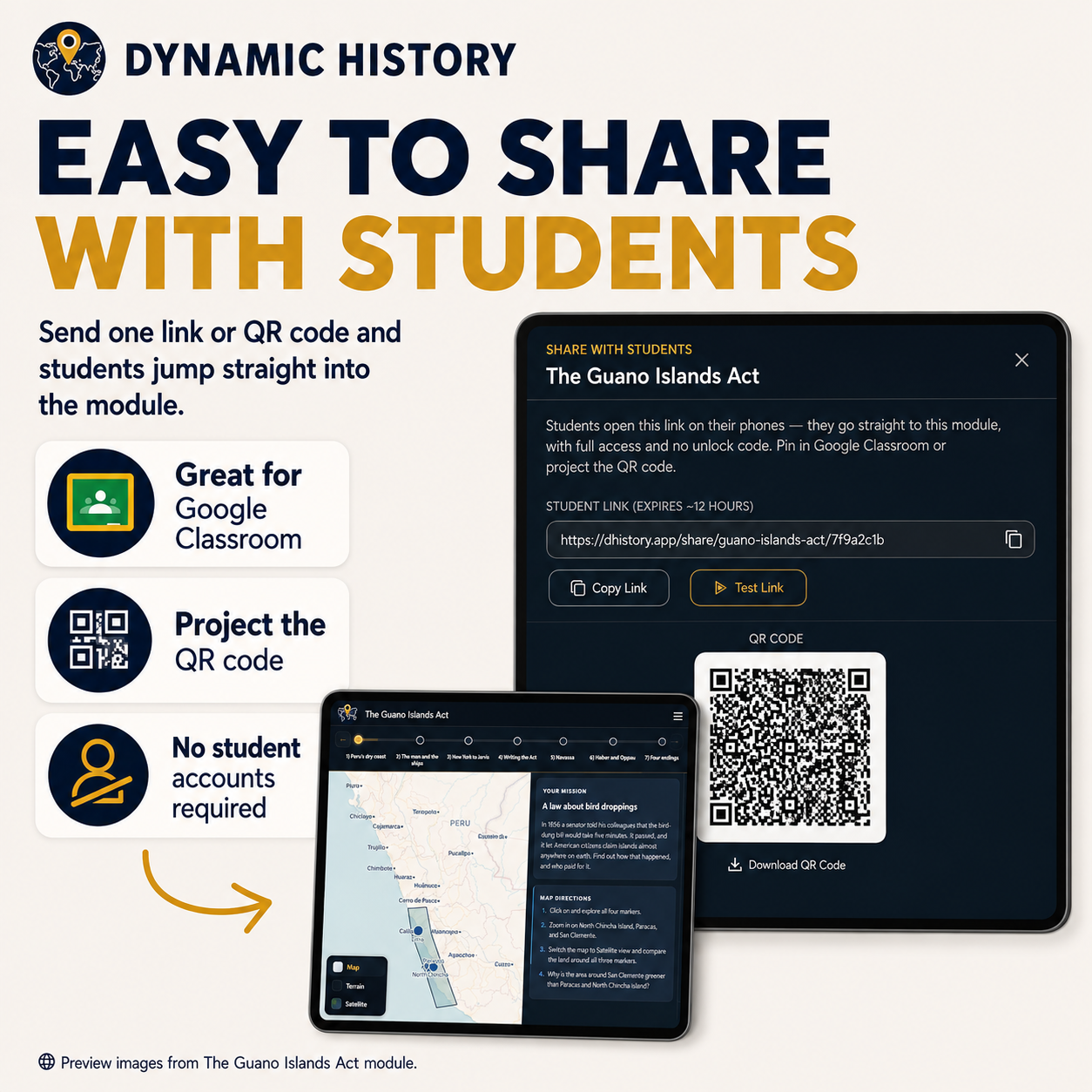
Open the included START HERE PDF to access the shared folder, make classroom copies, and open the interactive Dynamic History module. The Teacher Guide supports instruction while the students use the interactive readers and the assessment resources.
Frequently asked questions
Is there a separate printed reader? No. Standard and Accessible reading versions are available inside the interactive investigation; printable assessment worksheets are provided separately.
Do I need a Readers Theater script? No. This is a complete standalone Dynamic History lesson.
Can I teach it without students using individual devices? You may project and discuss the maps as a class, then use the printable worksheet and quiz for paper responses.
Complete the series or try the free first lesson
This two-day investigation can be taught independently or as part of the Civil War & Reconstruction complete eight-module bundle, which follows the historical sequence from slavery and secession to the contested outcomes of Reconstruction.
Before purchasing, you can try the complete free first lesson: Why Did the Civil War Begin? Slavery, Expansion & Secession, with the same six-stop structure, Standard and Accessible readings, Teacher Guide, and classroom assessment resources. Or browse all eight lessons.
Share