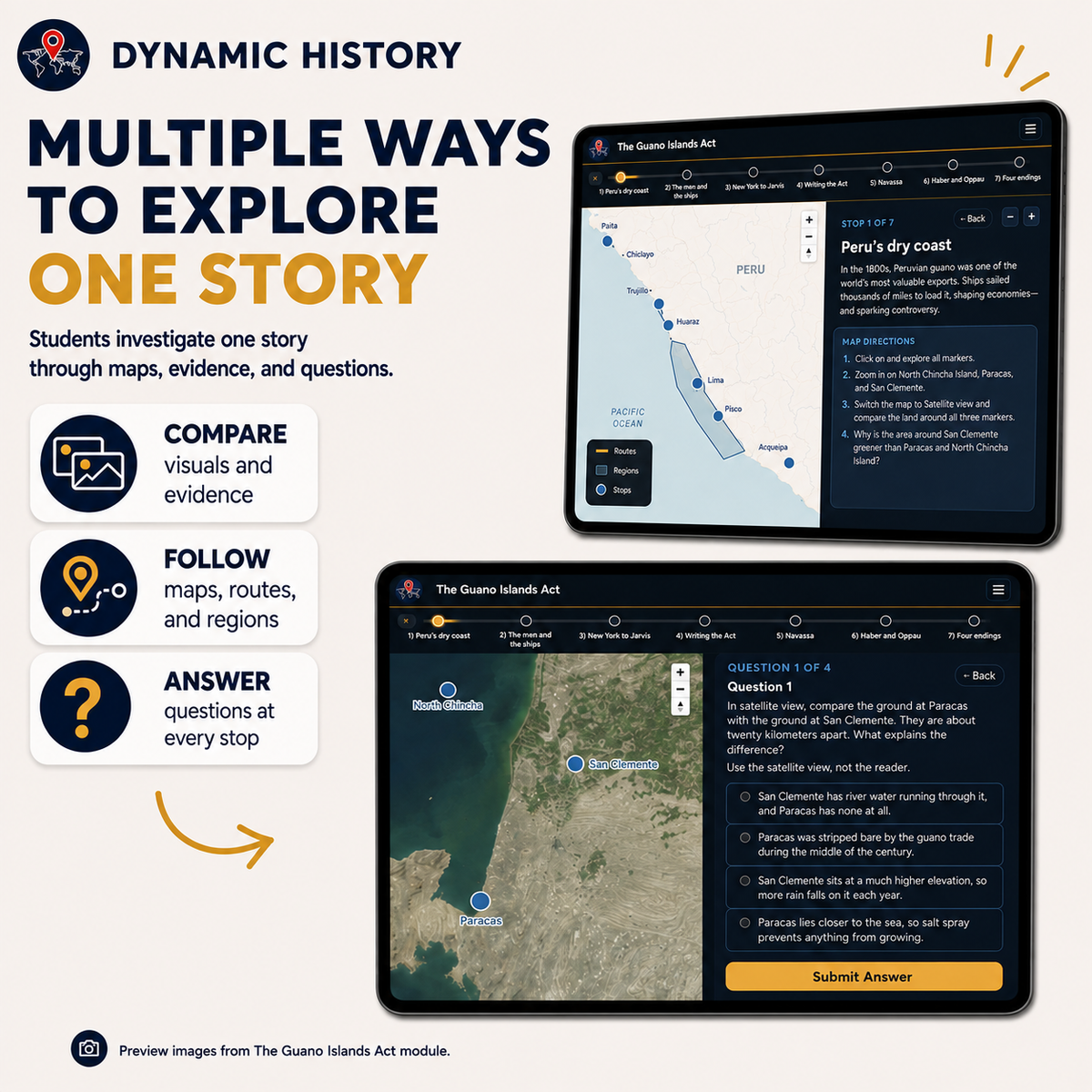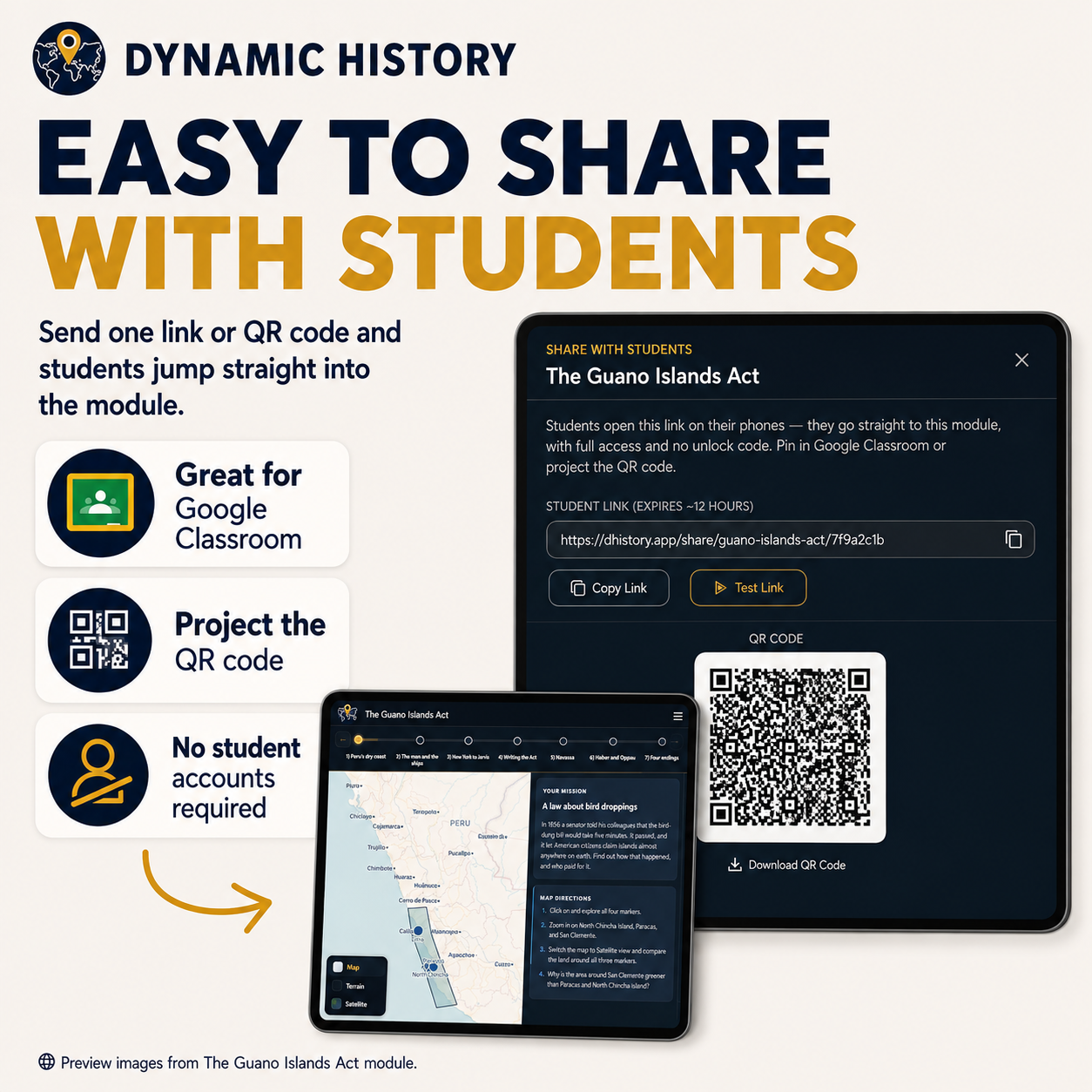


Dynamic History
The Great Emu War | Dynamic History Module | Grades 9-12
The Great Emu War | Dynamic History Module | Grades 9-12
Couldn't load pickup availability
Classroom Use at a Glance
A grades 9-12 two-day Dynamic History lesson on the 1932 Great Emu War in Western Australia. Strong fit for Australian History, the Great Depression, soldier settlement, Wheatbelt agriculture, rural history, environmental history, and government-policy analysis. Students examine farm vulnerability, emu movement, Lewis guns, tactical mismatch, newspaper war rhetoric, later military requests, and policy effectiveness.
Classroom Uses Whole Class, Small Groups, Content-Area Reading, Discussion, Assessment, Review, Homework, Sub Plan view all
- Whole Class
- Small Groups
- Content-Area Reading
- Discussion
- Assessment
- Review
- Homework
- Sub Plan
Included Teacher Guide, Student Worksheet, Answer Key, Quiz, Google Forms Quiz, Vocabulary, Discussion Questions, Challenge Questions view all
- Teacher Guide
- Student Worksheet
- Answer Key
- Quiz
- Google Forms Quiz
- Vocabulary
- Discussion Questions
- Challenge Questions
Format PDF, DOCX, Google Docs, Google Slides, Google Forms, PowerPoint, ZIP Download, Printable, Editable view all
- DOCX
- Google Docs
- Google Slides
- Google Forms
- PowerPoint
- ZIP Download
- Printable
- Editable
Differentiation Accessible Version, Mixed Reading Levels, ELL Support, Struggling Readers, Vocabulary Support, Small-Group Support view all
- Accessible Version
- Mixed Reading Levels
- ELL Support
- Struggling Readers
- Vocabulary Support
- Small-Group Support
Turn the Great Emu War into a two-day investigation of Australian history, Western Australia's Wheatbelt, Great Depression-era farm pressure, human-wildlife conflict, government policy, and media framing. Students first reconstruct why farmers around Campion were already economically vulnerable before emu damage became the famous part of the story.
They then test why military assistance and Lewis guns could seem plausible, why the plan struggled against fast-moving emus and rough terrain, how newspapers created the memorable "war" framing, and how later government choices change the way the 1932 intervention should be judged.
What Students Investigate
- Falling wheat prices, drought, debt, and Depression-era pressure on Wheatbelt farmers
- Soldier settlers and the agricultural landscape of Western Australia
- How emu movement intersected with wheat fields, water, fences, and farm livelihoods
- Why military assistance and Lewis guns could appear to offer a fast solution
- Why concentration, dispersion, terrain, mobility, and equipment problems undermined the plan
- How contemporary war rhetoric and later policy choices shaped the event's historical memory
What's Included
- Six-stop Dynamic History investigation designed for two class periods
- Teacher Guide and Answer Key with flexible pacing
- Standard Offline Print Module
- Accessible Offline Print Module with the same core history and evidence at reduced reading complexity
- Editable digital student worksheet and print student worksheet
- Self-grading Google Forms quiz and multiple-choice print quiz
- Vocabulary, short-answer, challenge, and multiple-choice assessment bank
Where This Fits in Your Curriculum
This module is designed for Australian History and works especially well with studies of Western Australia, Australia between the world wars, the Great Depression, soldier settlement, rural development, agriculture, and government responses to economic pressure. It also supports environmental history, human-wildlife conflict, policy evaluation, technology-and-environment questions, and media literacy.
Skills Addressed
- Historical cause and effect
- Map and geographic reasoning
- Primary-source and evidence analysis
- Distinguishing what a source supports from what it cannot prove
- Evidence-based discussion and writing
Standards Alignment
CCSS RH.9-10.1, RH.9-10.2, RH.9-10.6, RH.9-10.7, RH.9-10.9; extended writing may support WHST.9-10.1, WHST.9-10.2, and WHST.9-10.9.
Pair It With the Matching Resource
The Great Emu War Reader's Theater gives students the same verified history through the other instructional format.
Try Strange True Stories Free
Preview both classroom formats at no cost: FREE Guano Islands Act Dynamic History Module and FREE Guano Act Reader's Theater.
Save With the Full Strange True Stories Bundle
Get all 5 Dynamic History modules + all 5 matching Reader's Theater resources, plus the bundle-exclusive Educator Planning & Implementation Guide. Browse the complete Strange True Stories collection.
Share