Readers Theater Worksheets
Who Owns the Past? Egyptian Artifacts Debate Mini Reader + Reader’s Theater | Ancient Egypt Part 5
Who Owns the Past? Egyptian Artifacts Debate Mini Reader + Reader’s Theater | Ancient Egypt Part 5
Couldn't load pickup availability
Classroom Use at a Glance
A one-class-period Ancient Egypt mini reader and Reader’s Theater lesson for grades 6–12 focused on Who Owns the Past? Egyptian Artifacts Debate, designed for background building, mixed reading levels, fluency practice, discussion, and comprehension assessment.
Classroom Uses Whole Class, Content-Area Reading, Fluency Practice, Discussion, Assessment, Sub Plan view all
- Whole Class
- Content-Area Reading
- Fluency Practice
- Discussion
- Assessment
- Sub Plan
Included Reader’s Theater Script, Original Mini Reader, Accessible Mini Reader, Teacher Guide, Student Worksheet, Answer Key, Quiz, Google Forms Quiz, Vocabulary, Discussion Questions, Writing Prompt view all
- Reader’s Theater Script
- Original Mini Reader
- Accessible Mini Reader
- Teacher Guide
- Student Worksheet
- Answer Key
- Quiz
- Google Forms Quiz
- Vocabulary
- Discussion Questions
- Writing Prompt
Format PDF, DOCX, Google Docs, Google Forms, Printable, Editable view all
- DOCX
- Google Docs
- Google Forms
- Printable
- Editable
Differentiation Original Version, Accessible Version, Mixed Reading Levels, Vocabulary Support, Short Sections view all
- Original Version
- Accessible Version
- Mixed Reading Levels
- Vocabulary Support
- Short Sections
Overview
Bring Ancient Egypt, museum ethics, and the modern artifacts debate to life with a flexible Mini Reader + Reader’s Theater resource built for grades 6–12. Instead of giving students a simple yes-or-no answer, this lesson pulls them into a public hearing about famous Egyptian artifacts, evidence, law, national identity, museum responsibility, source countries, stolen objects, purchased objects, returned objects, and human remains.
Students learn how to evaluate artifact ownership claims using evidence instead of slogans while raising deeper questions about who owns the past, who gets to display it, and when return, sharing, or continued museum care may be the strongest answer.
Perfect For
- Ancient Egypt mini-units
- World History lessons on empire, cultural diffusion, museums, or European expansion
- Grades 6–12 classrooms with mixed reading levels
- Source perspective, cultural borrowing, and historical evidence lessons
- One-day flexible lessons, sub plans, review days, or enrichment activities
Ease of Differentiation
Every assessment option is designed to be answerable from the Reader’s Theater Script, the Original Mini Reader, or the Accessible Mini Reader.
Flexible Classroom Use
- Use the Reader’s Theater script for whole-class participation, small-group performance, oral fluency, and discussion.
- Use the Original or Accessible Mini Reader for independent reading, homework, intervention, ELL support, or differentiated groups.
- Assign digitally through Google Classroom or print selected student files for non-digital classrooms.
Skills Addressed
- Reading comprehension across differentiated texts
- Historical cause and effect
- Cultural diffusion and appropriation analysis
- Source perspective and missing voices
- Evidence-based discussion and written response
- Vocabulary development
- Oral fluency and collaborative reading
What’s Included
This product includes a zip file consisting of:
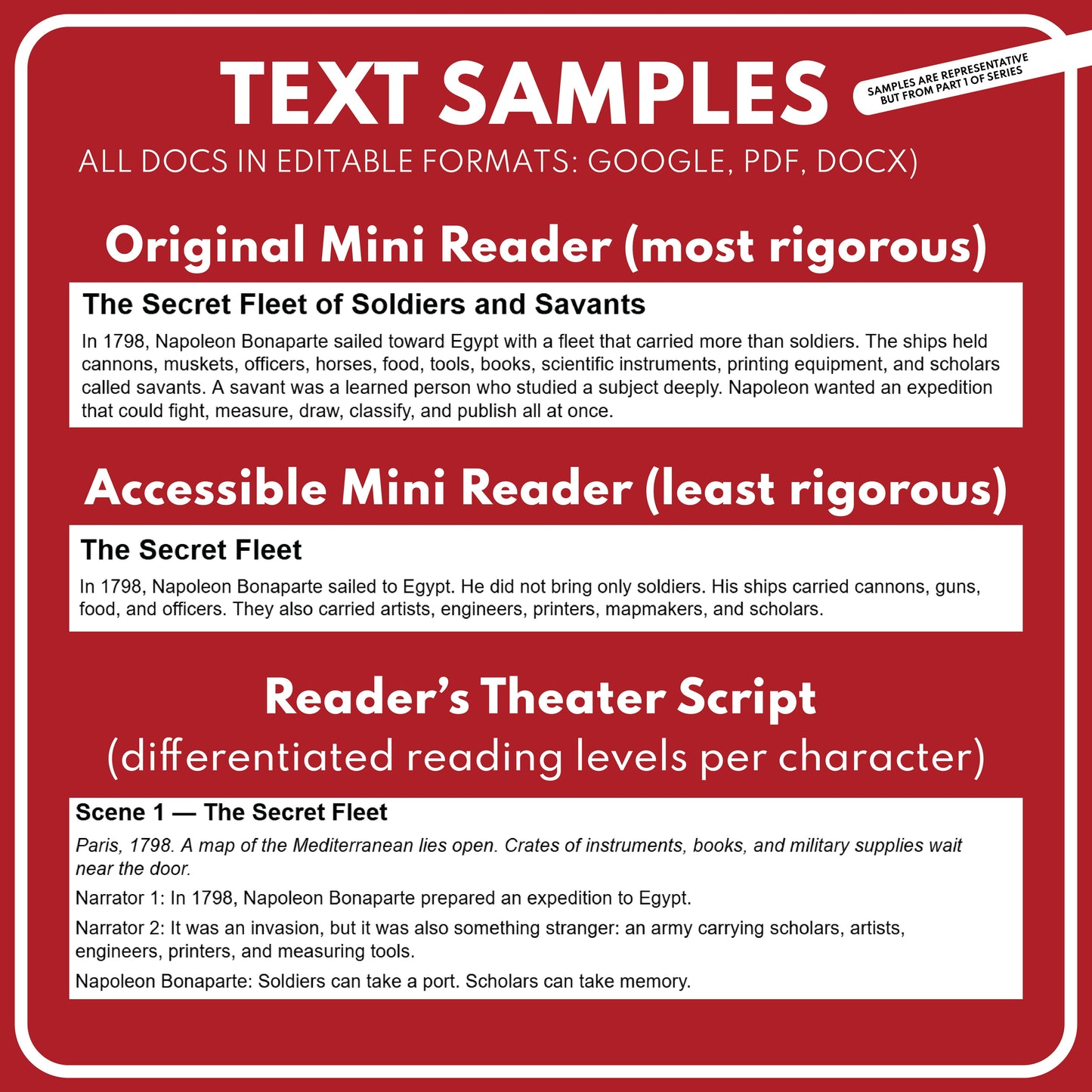
Student Text Options
Reader’s Theater Script (~2,600 words | ~FKGL 9.5)
- Differentiated character roles
- Whole-class or small-group reading
- Designed for oral fluency, discussion, and dramatic engagement
Original Mini Reader (~3,300 words | ~FKGL 8.8)
- More detailed student reading
- Best for stronger independent readers, homework, or deeper historical analysis
Accessible Mini Reader (~2,200 words | ~FKGL 6.5)
- Lower reading complexity
- Best for mixed-level classes, struggling readers, ELL support, intervention groups, or faster one-day use
Assessment Materials
- Discussion Questions
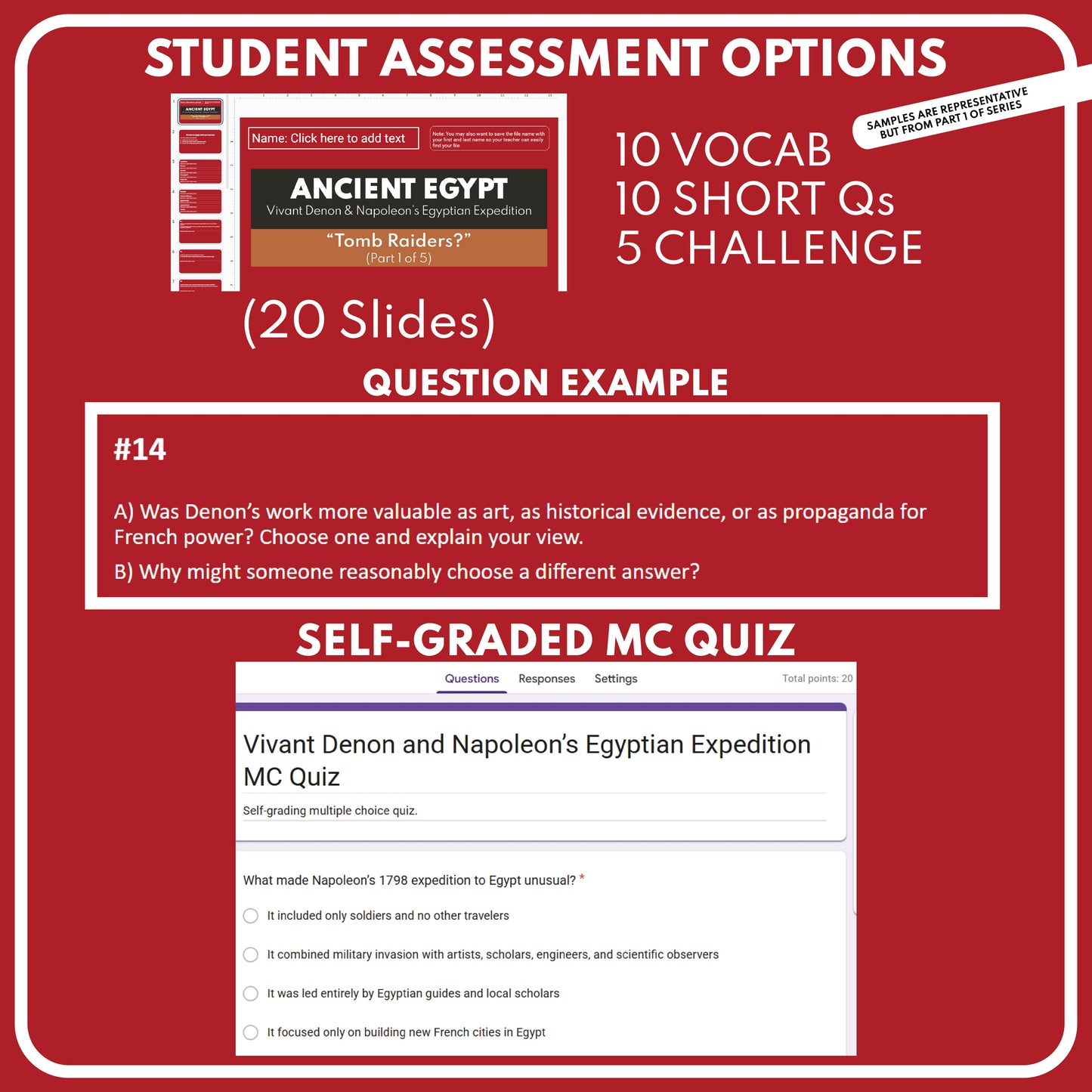
- Student worksheet (10 vocabulary words, 10 comprehension questions, and 5 challenge questions)
- 20 Multiple Choice Question Exit Quiz (self-graded for Google Forms)
Teacher Materials
- Answer keys for vocabulary, short answer, challenge questions, and print quiz
- Themes and discussion question prompts
- Standards alignment guide
- Optional visual support links
Bonus Leveled Lit Classics Access
Includes student reading access in the Leveled Lit Classics Library for easy digital, Kindle-like reading on any device.
Try the Free Part 1 First
Still not sure this lesson will meet your needs? Download 100% FREE Part 1, Denon and Napoleon’s Expedition, of this series.
Text Summary
This capstone lesson asks students to evaluate famous Egyptian artifact debates using evidence, not slogans. Students consider examples such as the Rosetta Stone, Nefertiti, the Dendera Zodiac, returned objects, museum claims, source-country claims, and the ethics of displaying mummified human remains.
Analysis Overview
Students examine why artifact ownership questions are complicated and why different objects may require different answers. The resource helps students compare legal ownership, moral responsibility, cultural identity, museum access, provenance, and respect for the dead.
Share