Readers Theater Worksheets
New York State History | Explorers, Waterways, and the Fur Trade RT Script and Mini Readers | Grades 3-5
New York State History | Explorers, Waterways, and the Fur Trade RT Script and Mini Readers | Grades 3-5
Couldn't load pickup availability
Classroom Use at a Glance
A New York State History mini reader and Reader’s Theater resource for grades 3–5 with original and accessible reading options, fluency practice, historical discussion, source-based extension, and assessment materials.
Classroom Uses Whole Class, Small Groups, Content-Area Reading, Discussion, Assessment, Review view all
- Whole Class
- Small Groups
- Content-Area Reading
- Discussion
- Assessment
- Review
Included Reader’s Theater Script, Original Mini Reader, Accessible Mini Reader, Teacher Guide, Student Worksheet, Answer Key, Quiz, Google Forms Quiz, Vocabulary, Discussion Questions, Challenge Questions, Primary Source Extension view all
- Reader’s Theater Script
- Original Mini Reader
- Accessible Mini Reader
- Teacher Guide
- Student Worksheet
- Answer Key
- Quiz
- Google Forms Quiz
- Vocabulary
- Discussion Questions
- Challenge Questions
- Primary Source Extension
Format PDF, DOCX, Google Forms, ZIP Download, Printable, Editable view all
- DOCX
- Google Forms
- ZIP Download
- Printable
- Editable
Differentiation Accessible Version, Original Version, Mixed Reading Levels, ELL Support, Struggling Readers, Vocabulary Support, Small-Group Support view all
- Accessible Version
- Original Version
- Mixed Reading Levels
- ELL Support
- Struggling Readers
- Vocabulary Support
- Small-Group Support
Overview
Bring New York State History to life with a Grade 4 Reader’s Theater + differentiated Mini Reader set on explorers, waterways, Native New York, and the fur trade. Students explore how Verrazzano, Hudson, and Champlain entered waterways that Native people already knew, used, protected, and understood long before European maps described them.
Students learn why New York waterways mattered as routes for travel, trade, food, communication, alliance, and conflict. The deeper question asks students to think about perspective: what European letters and maps can show, what they leave out, and why missing Native voices matter when studying exploration and the fur trade.
This resource is included in the 10-part NY State History Mini Unit:
Make sure this resource format will meet your classroom needs.
Perfect For
- New York State History units
- Grade 4 social studies
- Mixed reading levels in grades 3–5
- Explorers, waterways, Native New York, European contact, Fort Orange, Lake Champlain, and the fur trade
- One-day lesson, sub plan, review, enrichment, or primary-source extension
Ease of Differentiation
Every assessment option is designed to be answerable from the Reader’s Theater Script and both versions of the Mini Reader (Original & Accessible).
One Challenge Question uses the linked Verrazzano letter source packet.
Flexible Classroom Use
- Use the Reader’s Theater script for whole-class participation, small-group performance, oral fluency, and discussion.
- Use the Original or Accessible Mini Reader for independent reading, homework, intervention, ELL support, or differentiated groups.
- Assign digitally or print selected student sections.
- Use the source extension for written response, challenge questions, homework, or teacher-led discussion.
Skills Addressed
- Reading comprehension across differentiated texts
- Historical perspective and source analysis
- Geography and waterway route analysis
- Cause and effect in exploration and trade
- Native decision-making and alliance analysis
- Fur trade benefits, risks, and consequences
- Evidence-based discussion and written response
- Vocabulary development
- Oral fluency and collaborative reading
- Identifying missing voices in historical sources
What’s Included
This product includes a zip file consisting of:
Student Text Options
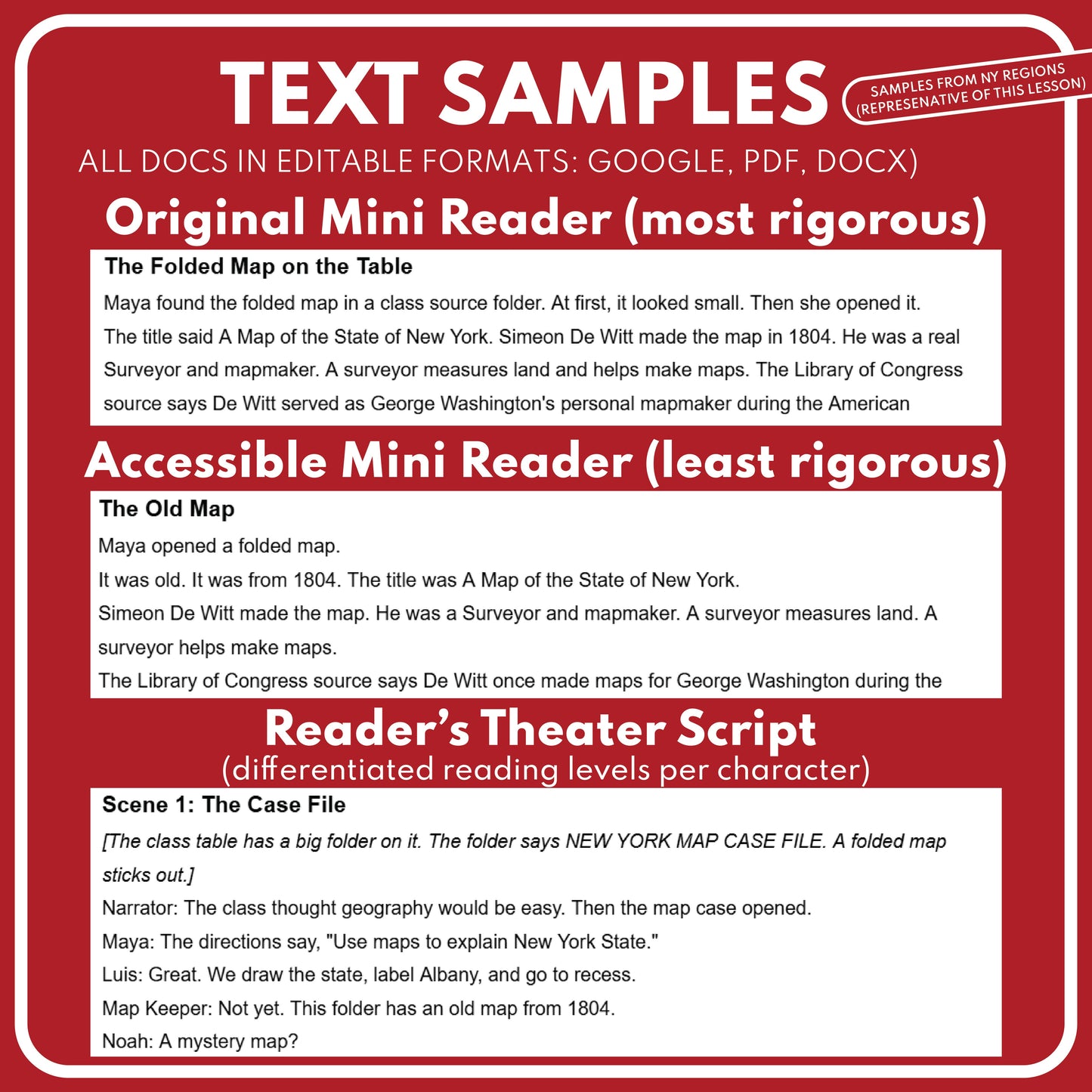
Reader’s Theater Script (~2,300 words | ~FKGL 5.0)
Differentiated character roles
Whole-class or small-group reading
Designed for oral fluency, discussion, and dramatic engagement
Original Mini Reader (~2,800 words | ~FKGL 4.9)
More detailed student reading
Best for stronger independent readers, homework, or deeper historical analysis
Accessible Mini Reader (~1,900 words | ~FKGL 4.0)
Lower reading complexity
Best for mixed-level classes, struggling readers, ELL support, intervention groups, or faster one-day use
Assessment Materials
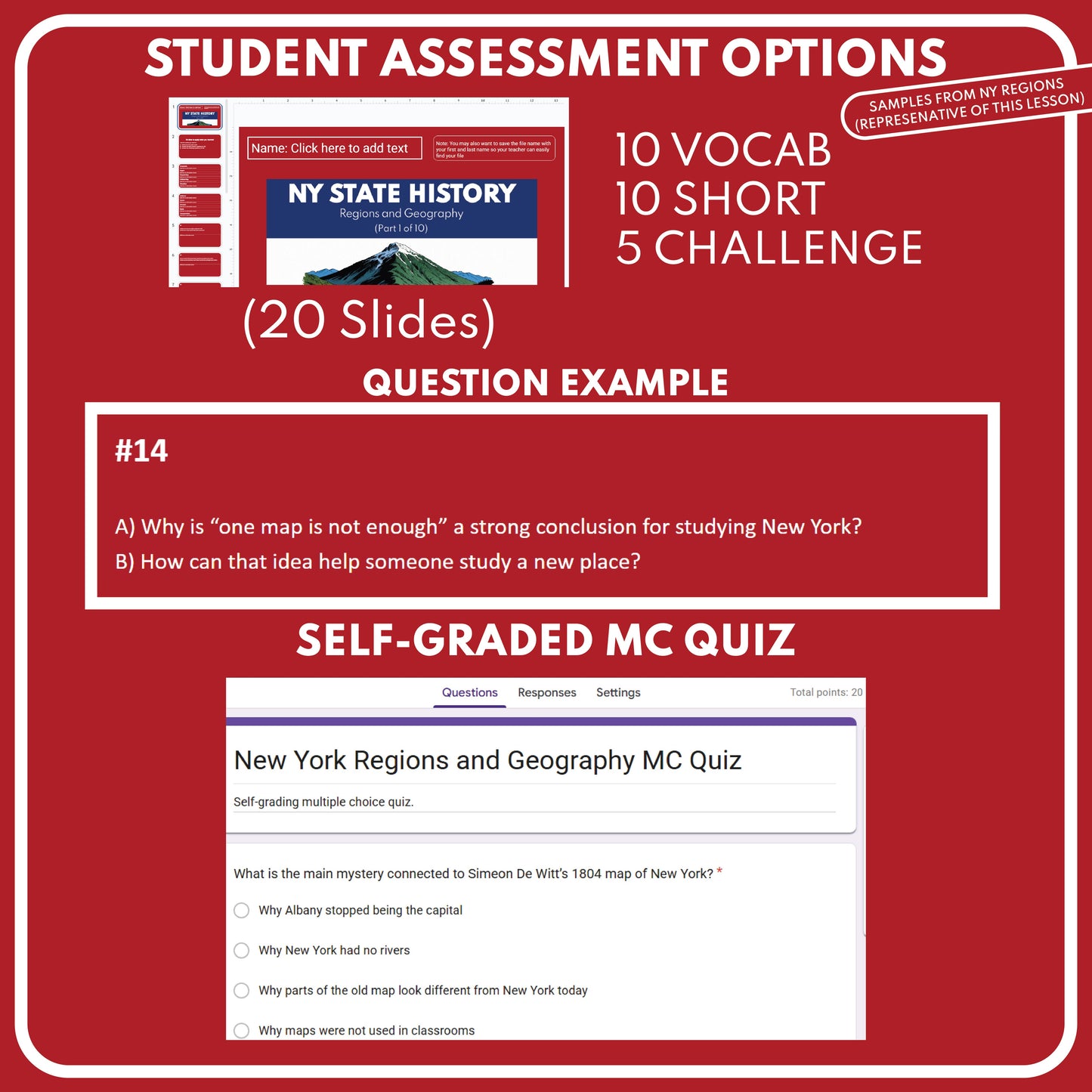
- Discussion Questions
- Student worksheet (10 Vocab Words | 10 comprehension questions | 5 challenge questions)
- 20 Multiple Choice Question Exit Quiz (Self-Graded for Google Forms)
Teacher Materials
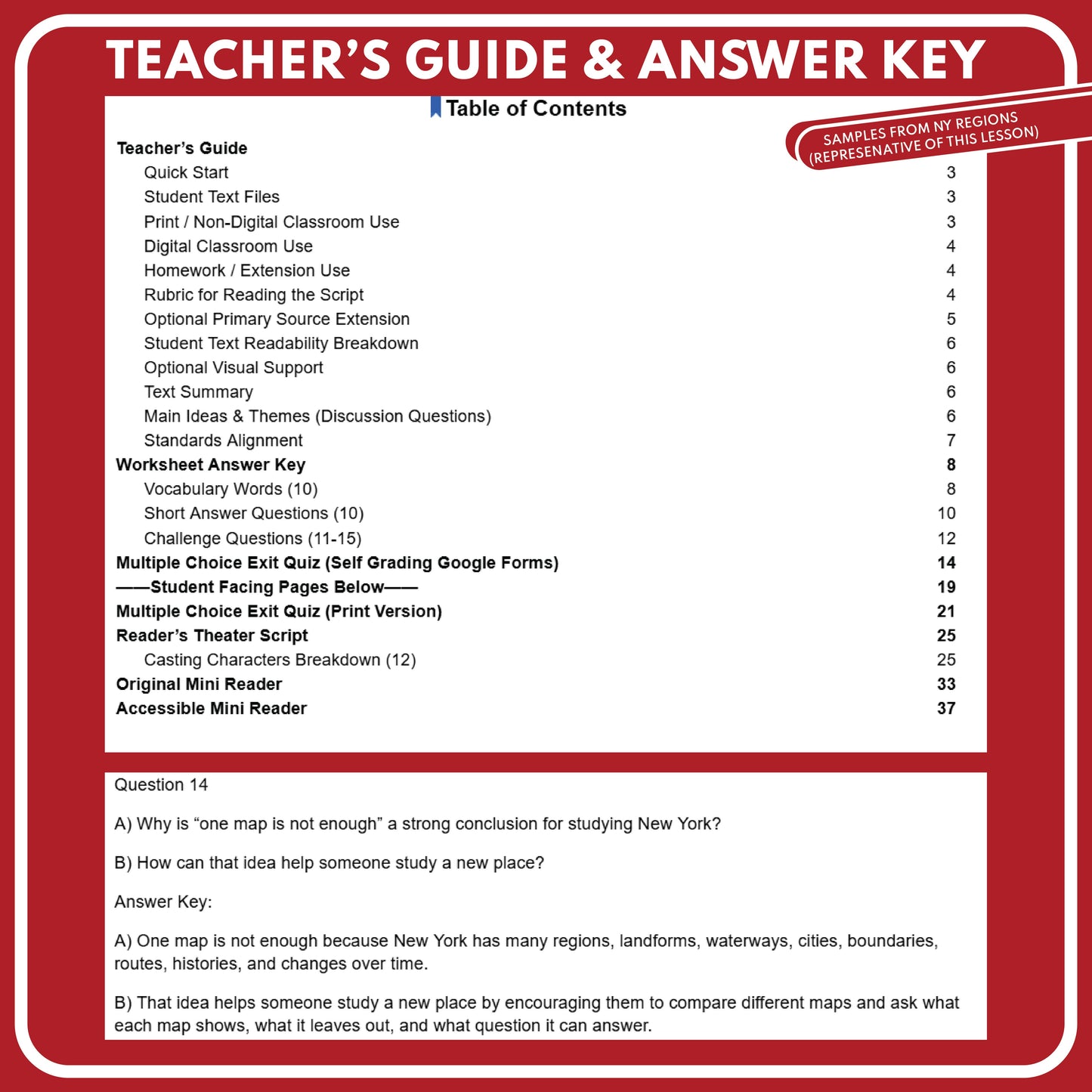
- Answer keys for vocabulary, short answer, challenge questions, and print quiz
- Themes and discussion question prompts
- Standards alignment guide
- Optional visual support links
BONUS Leveled Lit Classics Access
Includes student reading access in the Leveled Lit Classics Library making for easy digital kindle-like reading on any device
Text Summary
Students learn how Verrazzano, Hudson, and Champlain entered New York waterways that Native people already knew, used, and protected. The texts connect route-to-Asia searches, Native decision-making, the beaver fur trade, Fort Orange, Lake Champlain, alliances, conflict, and the problem of missing voices in maps and letters.
Analysis Overview
Students analyze waterways as active routes rather than empty blue lines on a map. They also examine Verrazzano’s letter as a useful but limited European source, connect the fur trade to both opportunity and pressure, and consider how maps and written records can leave out Native names, choices, and perspectives.
Share