

Readers Theater Worksheets
New York State History | Haudenosaunee and Algonquian Peoples RT Script and Mini Readers | Grades 3-5
New York State History | Haudenosaunee and Algonquian Peoples RT Script and Mini Readers | Grades 3-5
Couldn't load pickup availability
Classroom Use at a Glance
A New York State History mini reader and Reader’s Theater resource for grades 3–5 with original and accessible reading options, fluency practice, historical discussion, source-based extension, and assessment materials.
Classroom Uses Whole Class, Small Groups, Content-Area Reading, Discussion, Assessment, Review view all
- Whole Class
- Small Groups
- Content-Area Reading
- Discussion
- Assessment
- Review
Included Reader’s Theater Script, Original Mini Reader, Accessible Mini Reader, Teacher Guide, Student Worksheet, Answer Key, Quiz, Google Forms Quiz, Vocabulary, Discussion Questions, Challenge Questions, Primary Source Extension view all
- Reader’s Theater Script
- Original Mini Reader
- Accessible Mini Reader
- Teacher Guide
- Student Worksheet
- Answer Key
- Quiz
- Google Forms Quiz
- Vocabulary
- Discussion Questions
- Challenge Questions
- Primary Source Extension
Format PDF, DOCX, Google Forms, ZIP Download, Printable, Editable view all
- DOCX
- Google Forms
- ZIP Download
- Printable
- Editable
Differentiation Accessible Version, Original Version, Mixed Reading Levels, ELL Support, Struggling Readers, Vocabulary Support, Small-Group Support view all
- Accessible Version
- Original Version
- Mixed Reading Levels
- ELL Support
- Struggling Readers
- Vocabulary Support
- Small-Group Support
Overview
Bring New York State History to life with a Grade 4 Reader’s Theater + differentiated Mini Reader set on Haudenosaunee and Algonquian-speaking peoples in Native New York. Students learn why one broad label on a map cannot tell the full story of the many Native peoples, communities, governments, languages, homes, and histories connected to the region that became New York State.
Students explore Haudenosaunee longhouses, clans, matrilineal ties, councils, consensus, the Three Sisters, wampum, Algonquian-speaking peoples, rivers, shores, sovereignty, and Native continuity today. The deeper question asks students to think about how careful language, geography, records, homes, food systems, and governance help us avoid stereotypes and tell a more accurate history.
This resource is included in the 10-part NY State History Mini Unit:
Make sure this resource format will meet your classroom needs.
Perfect For
- New York State History units
- Grade 4 social studies
- Mixed reading levels in grades 3–5
- Haudenosaunee, Algonquian-speaking peoples, Native New York, longhouses, wampum, and the Three Sisters
- One-day lesson, sub plan, review, enrichment, or source-based extension
Ease of Differentiation
Every assessment option is designed to be answerable from the Reader’s Theater Script and both versions of the Mini Reader (Original & Accessible).
One Challenge Question uses the linked NYSM Mohawk Haudenosaunee Village source packet.
Flexible Classroom Use
- Use the Reader’s Theater script for whole-class participation, small-group performance, oral fluency, and discussion.
- Use the Original or Accessible Mini Reader for independent reading, homework, intervention, ELL support, or differentiated groups.
- Assign digitally or print selected student sections.
- Use the source extension for written response, challenge questions, homework, or teacher-led discussion.
Skills Addressed
- Reading comprehension across differentiated texts
- Native New York history and cultural understanding
- Geography and environment analysis
- Longhouse, clan, council, consensus, and wampum analysis
- Careful language and stereotype avoidance
- Evidence-based discussion and written response
- Vocabulary development
- Oral fluency and collaborative reading
- Connecting past and present Native continuity
What’s Included
This product includes a zip file consisting of:
Student Text Options
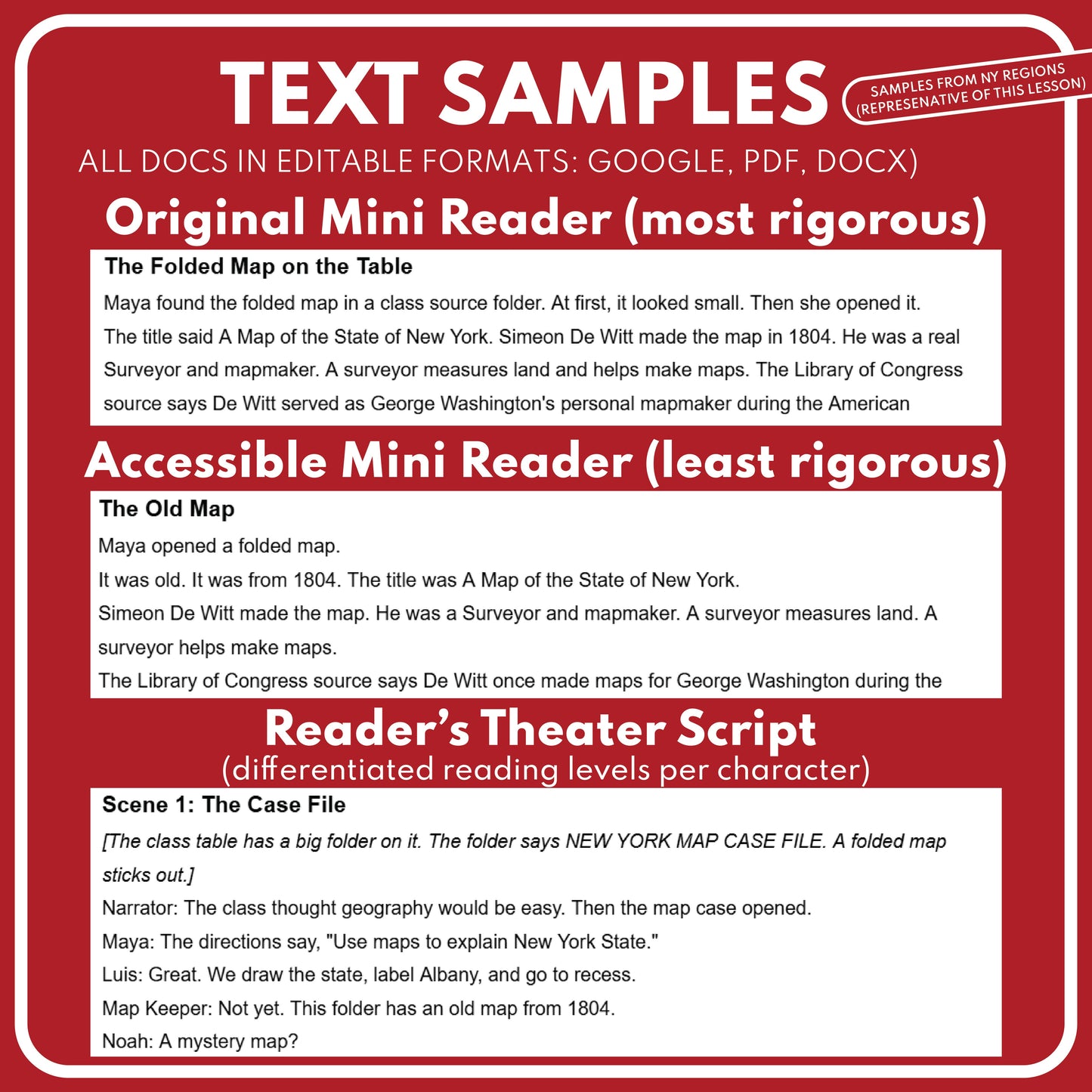
Reader’s Theater Script (~1,600 words | ~FKGL 3.8)
Differentiated character roles
Whole-class or small-group reading
Designed for oral fluency, discussion, and dramatic engagement
Original Mini Reader (~1,900 words | ~FKGL 4.3)
More detailed student reading
Best for stronger independent readers, homework, or deeper historical analysis
Accessible Mini Reader (~1,100 words | ~FKGL 4.0)
Lower reading complexity
Best for mixed-level classes, struggling readers, ELL support, intervention groups, or faster one-day use
Assessment Materials
- Discussion Questions
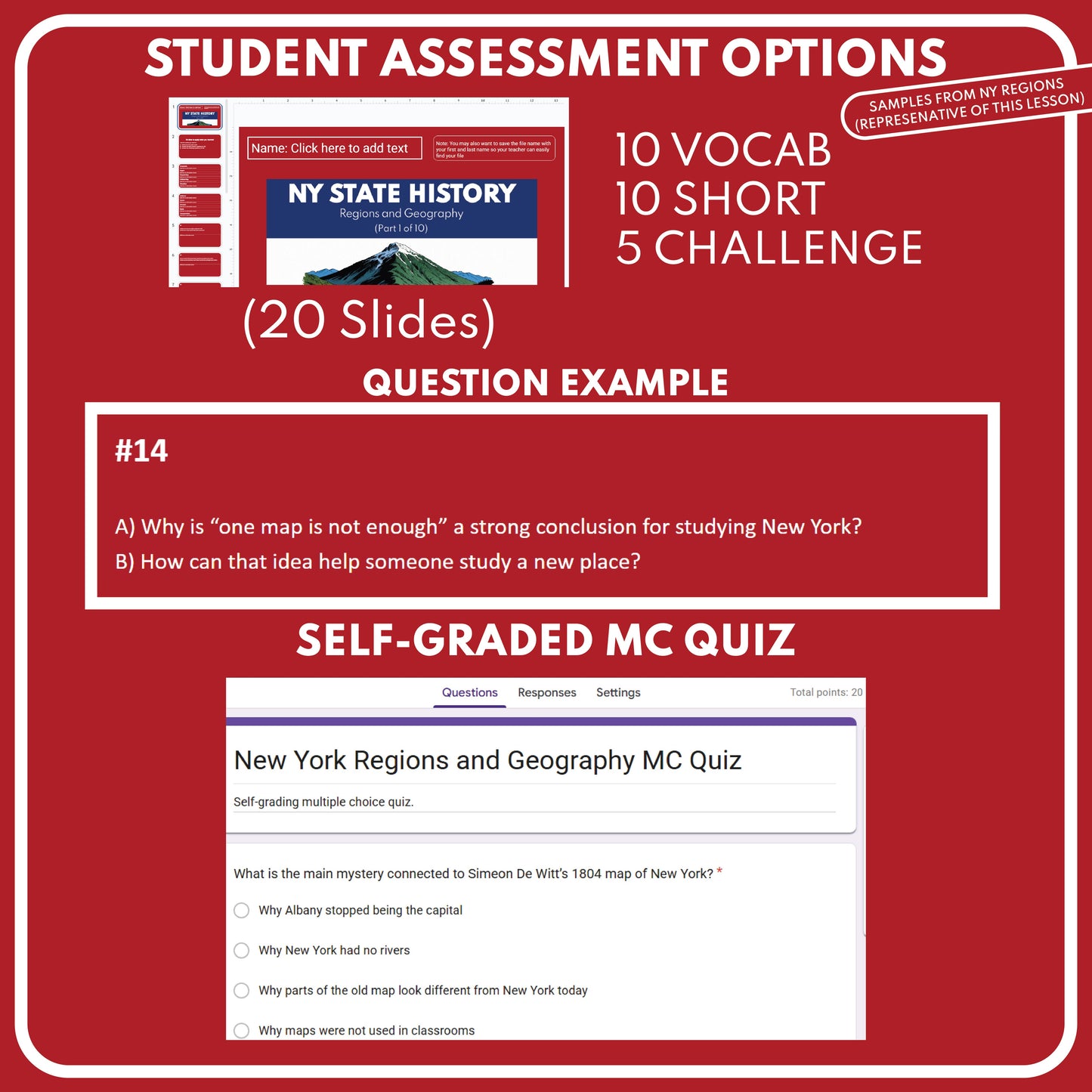
- Student worksheet (10 Vocab Words | 10 comprehension questions | 5 challenge questions)
- 20 Multiple Choice Question Exit Quiz (Self-Graded for Google Forms)
Teacher Materials
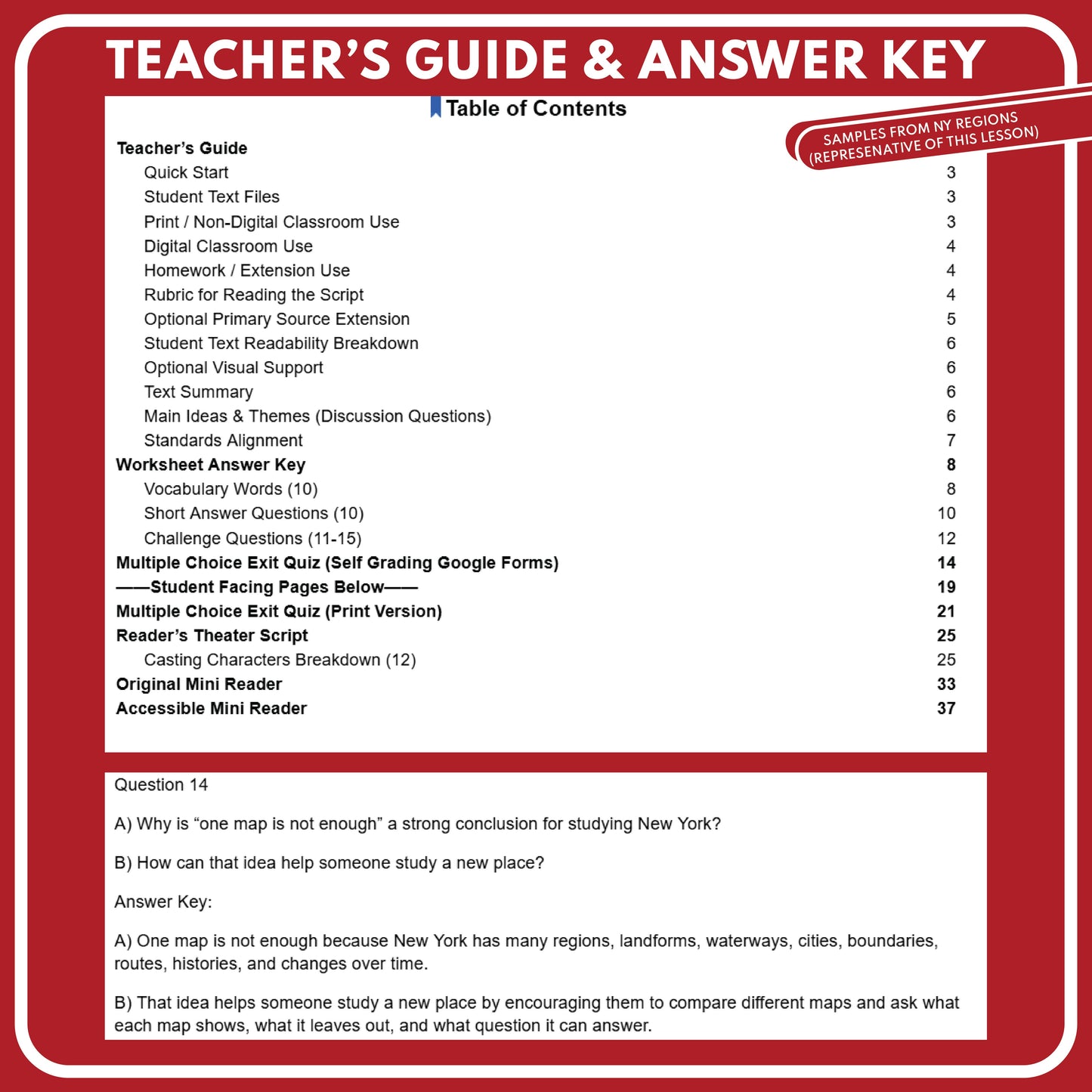
- Answer keys for vocabulary, short answer, challenge questions, and print quiz
- Themes and discussion question prompts
- Standards alignment guide
- Optional visual support links
BONUS Leveled Lit Classics Access
Includes student reading access in the Leveled Lit Classics Library making for easy digital kindle-like reading on any device
Text Summary
Students learn why one broad label on a map cannot tell the full story of Native New York. The texts explore Haudenosaunee longhouses, clans, councils, the Three Sisters, wampum, Algonquian-speaking peoples, rivers, shores, sovereignty, and present-day Native continuity.
Analysis Overview
Students analyze how broad labels can hide specific peoples, languages, governments, food systems, records, homes, and living Native nations. They also examine longhouses, fields, councils, waterways, and wampum as evidence of community life while practicing careful, respectful language about Native New York.
Share