Readers Theater Worksheets
New York State History | New Amsterdam Becomes New York RT Script and Mini Readers | Grades 3-5
New York State History | New Amsterdam Becomes New York RT Script and Mini Readers | Grades 3-5
Couldn't load pickup availability
Classroom Use at a Glance
A New York State History mini reader and Reader’s Theater resource for grades 3–5 with original and accessible reading options, fluency practice, historical discussion, source-based extension, and assessment materials.
Classroom Uses Whole Class, Small Groups, Content-Area Reading, Discussion, Assessment, Review view all
- Whole Class
- Small Groups
- Content-Area Reading
- Discussion
- Assessment
- Review
Included Reader’s Theater Script, Original Mini Reader, Accessible Mini Reader, Teacher Guide, Student Worksheet, Answer Key, Quiz, Google Forms Quiz, Vocabulary, Discussion Questions, Challenge Questions, Primary Source Extension view all
- Reader’s Theater Script
- Original Mini Reader
- Accessible Mini Reader
- Teacher Guide
- Student Worksheet
- Answer Key
- Quiz
- Google Forms Quiz
- Vocabulary
- Discussion Questions
- Challenge Questions
- Primary Source Extension
Format PDF, DOCX, Google Forms, ZIP Download, Printable, Editable view all
- DOCX
- Google Forms
- ZIP Download
- Printable
- Editable
Differentiation Accessible Version, Original Version, Mixed Reading Levels, ELL Support, Struggling Readers, Vocabulary Support, Small-Group Support view all
- Accessible Version
- Original Version
- Mixed Reading Levels
- ELL Support
- Struggling Readers
- Vocabulary Support
- Small-Group Support
Overview
Bring early New York history to life with a Grade 4 Reader’s Theater + Mini Reader resource on how Dutch New Amsterdam became English New York. Students investigate maps, trade, Native relationships, company power, free and enslaved African communities, half-freedom, and the 1664 English takeover through differentiated student texts and clean, ready-to-use assessments.
Students learn that New Amsterdam was diverse, but not equal, and that historical evidence must be read carefully. The deeper question asks how a map can show streets and buildings while hiding labor, unequal power, and people whose stories require more sources to recover.
This resource is included in the 10-part NY State History Mini Unit:
Make sure this resource format will meet your classroom needs.
Perfect For
- New York State History colonial New York units
- Grade 4 social studies and grades 3–5 mixed reading groups
- Dutch New Netherland / New Amsterdam / New York history lessons
- Map evidence, primary-source thinking, and historical cause/effect practice
- One-day lessons, sub plans, review, enrichment, or differentiated small groups
Ease of Differentiation
Every standard assessment option is designed to be answerable from the Reader’s Theater Script and both versions of the Mini Reader (Original & Accessible).
One clearly labeled source-based challenge question uses the linked New Netherland Institute primary-source transcription.
Flexible Classroom Use
- Use the Reader’s Theater script for whole-class participation, small-group performance, oral fluency, and discussion.
- Use the Original or Accessible Mini Reader for independent reading, homework, intervention, ELL support, or differentiated groups.
- Assign digitally or print selected student sections.
- Use the optional source-analysis extension for a primary-source challenge question, written response, homework, or teacher-led discussion.
Skills Addressed
- Reading comprehension across differentiated texts
- Historical cause and effect
- Map evidence and source-limit reasoning
- Primary-source analysis
- Vocabulary development
- Oral fluency and collaborative reading
- Understanding change and continuity in colonial New York
- Explaining how diversity and inequality could exist at the same time
What’s Included
This product includes a zip file consisting of:
Student Text Options
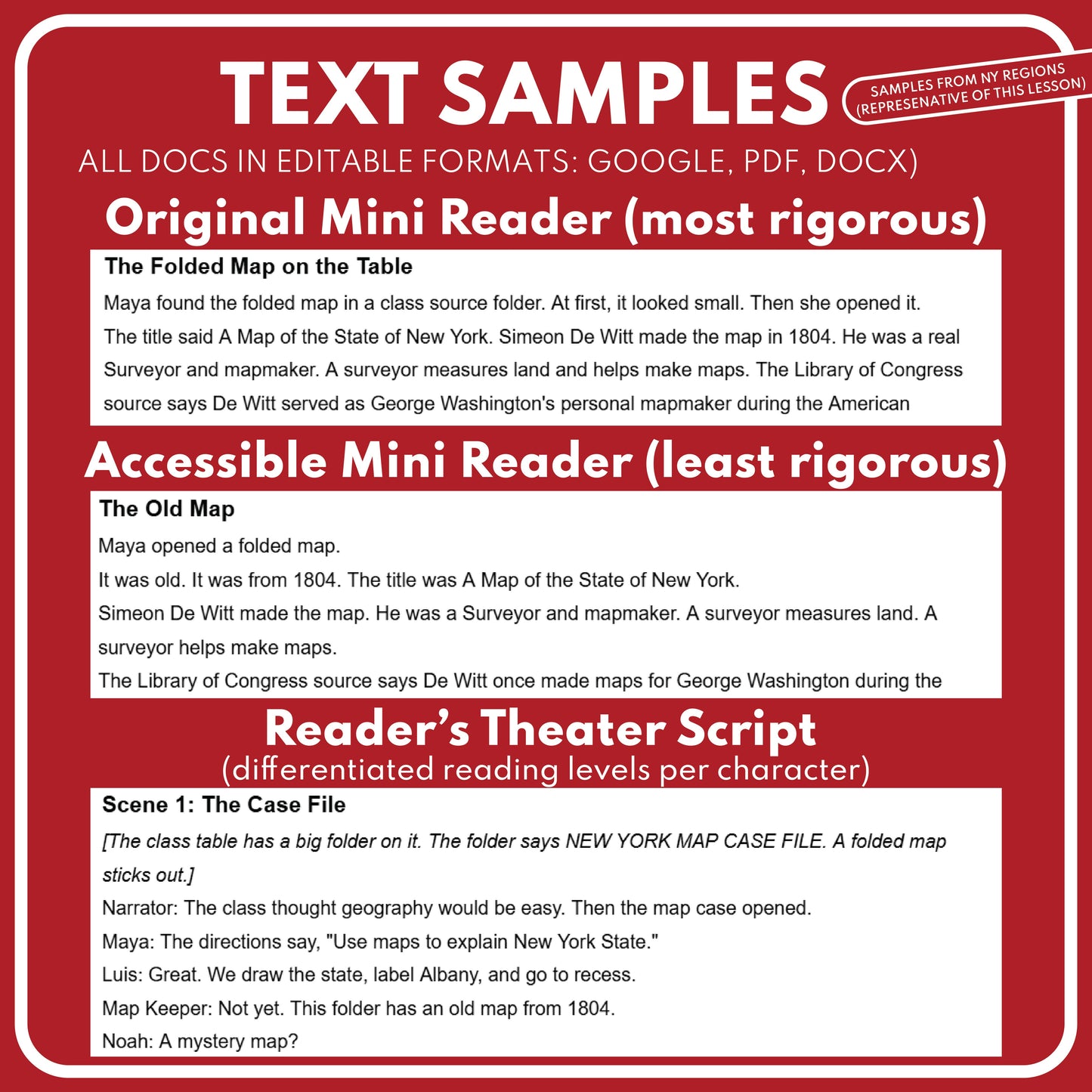
Reader’s Theater Script (~2,300 words | ~FKGL 5.1)
Differentiated character roles
Whole-class or small-group reading
Designed for oral fluency, discussion, and dramatic engagement
Original Mini Reader (~3,000 words | ~FKGL 4.7)
More detailed student reading
Best for stronger independent readers, homework, or deeper historical analysis
Accessible Mini Reader (~1,900 words | ~FKGL 3.7)
Lower reading complexity
Best for mixed-level classes, struggling readers, ELL support, intervention groups, or faster one-day use
Assessment Materials
- Discussion Questions
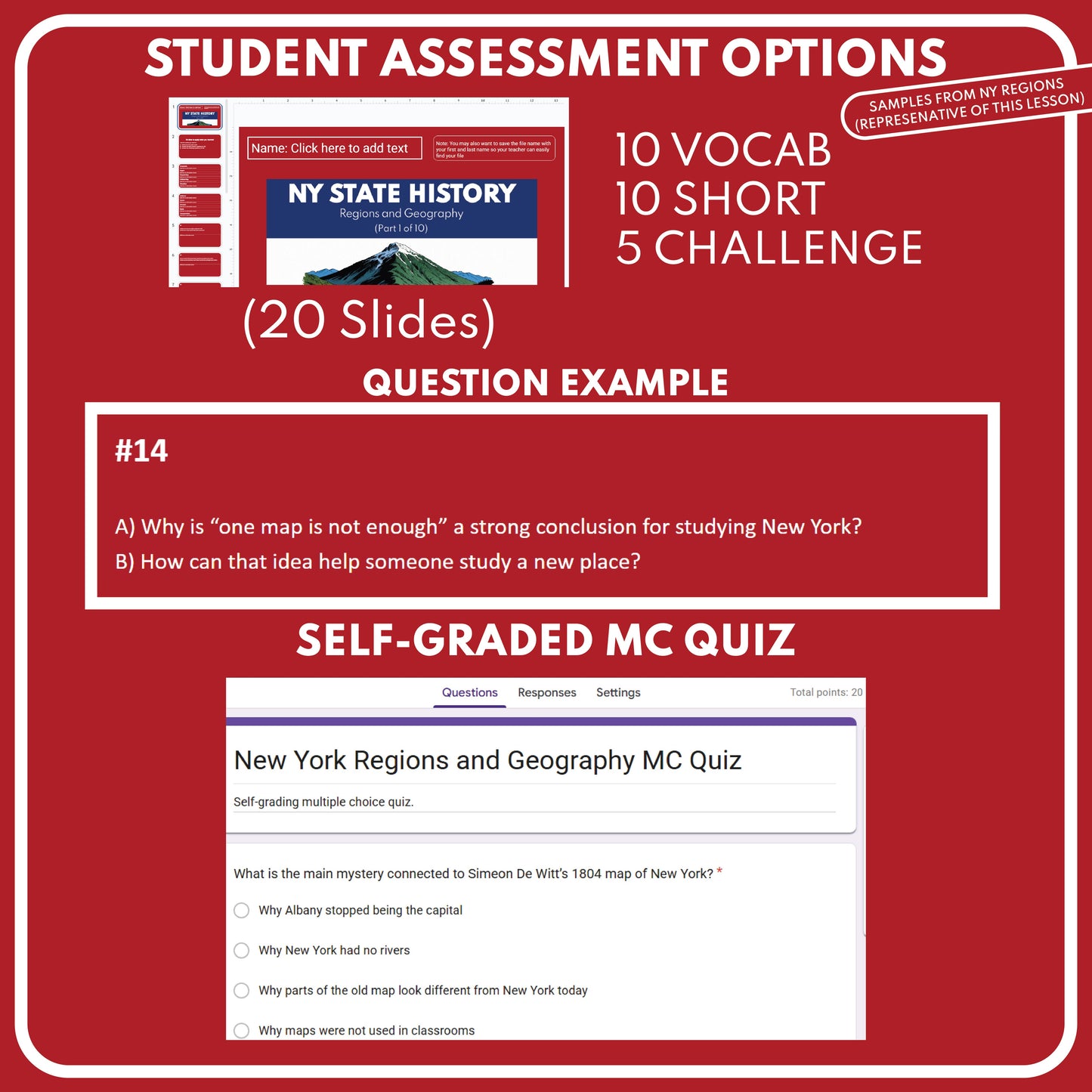
- Student worksheet (10 Vocab Words | 10 comprehension questions | 5 challenge questions)
- 20 Multiple Choice Question Exit Quiz (Self-Graded for Google Forms)
Teacher Materials
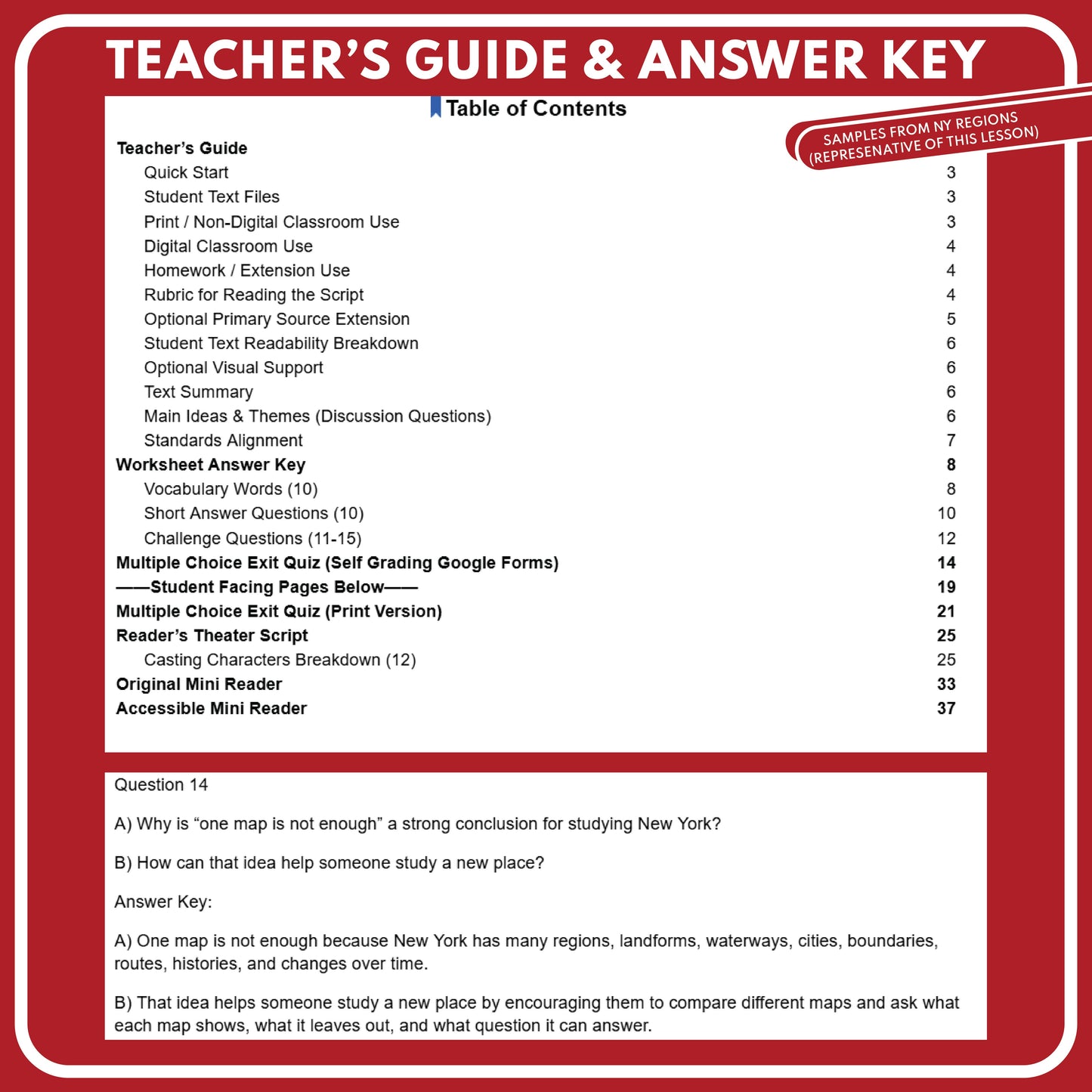
- Answer keys for vocabulary, short answer, challenge questions, and print quiz
- Themes and discussion question prompts
- Standards alignment guide
- Optional visual support links
BONUS Leveled Lit Classics Access
Includes student reading access in the Leveled Lit Classics Library making for easy digital kindle-like reading on any device
Text Summary
Students investigate how Dutch New Amsterdam grew through trade, company power, Native relationships, and the labor of free and enslaved African communities before becoming English New York in 1664. Across the script and mini readers, students learn that maps are useful evidence, but they must be read alongside records and other clues to notice hidden labor, unequal power, and historical change.
Analysis Overview
This resource emphasizes that New Amsterdam was diverse, but not equal. Students practice reading maps and records carefully by asking what each source shows, what it hides, and whose story still needs to be found.
Share