

Dynamic History
The Nile River: Why Did Civilization Grow Here? | Dynamic History Module | Grades 6-8
The Nile River: Why Did Civilization Grow Here? | Dynamic History Module | Grades 6-8
Couldn't load pickup availability
Classroom Use at a Glance
A complete grades 6-8 Dynamic History lesson on the Nile River and the growth of Ancient Egyptian civilization, calibrated primarily to Grade 6. Includes a six-stop two-day interactive investigation, Teacher Guide and Answer Key, and shared Google classroom files. Students investigate river direction, valley and desert geography, flood variability, basin irrigation, storage, transportation, cataracts, and settlement choices while weighing natural advantages against human organization.
Classroom Uses Whole Class, Small Groups, Content-Area Reading, Discussion, Assessment, Review, Homework, Sub Plan view all
- Whole Class
- Small Groups
- Content-Area Reading
- Discussion
- Assessment
- Review
- Homework
- Sub Plan
Included Teacher Guide, Student Worksheet, Answer Key, Quiz, Google Forms Quiz, Vocabulary, Challenge Questions view all
- Teacher Guide
- Student Worksheet
- Answer Key
- Quiz
- Google Forms Quiz
- Vocabulary
- Challenge Questions
Format PDF, DOCX, Google Docs, Google Slides, Google Forms, ZIP Download, Printable, Editable view all
- DOCX
- Google Docs
- Google Slides
- Google Forms
- ZIP Download
- Printable
- Editable
Differentiation Accessible Version, Mixed Reading Levels, ELL Support, Struggling Readers, Vocabulary Support, Small-Group Support view all
- Accessible Version
- Mixed Reading Levels
- ELL Support
- Struggling Readers
- Vocabulary Support
- Small-Group Support
Help students investigate why civilization grew along the Nile without reducing Ancient Egypt to a single geographic advantage. This Dynamic History module for grades 6-8, calibrated primarily to Grade 6, follows six stops from river direction and the valley-desert contrast to flood variability, irrigation, transportation, and settlement choices.
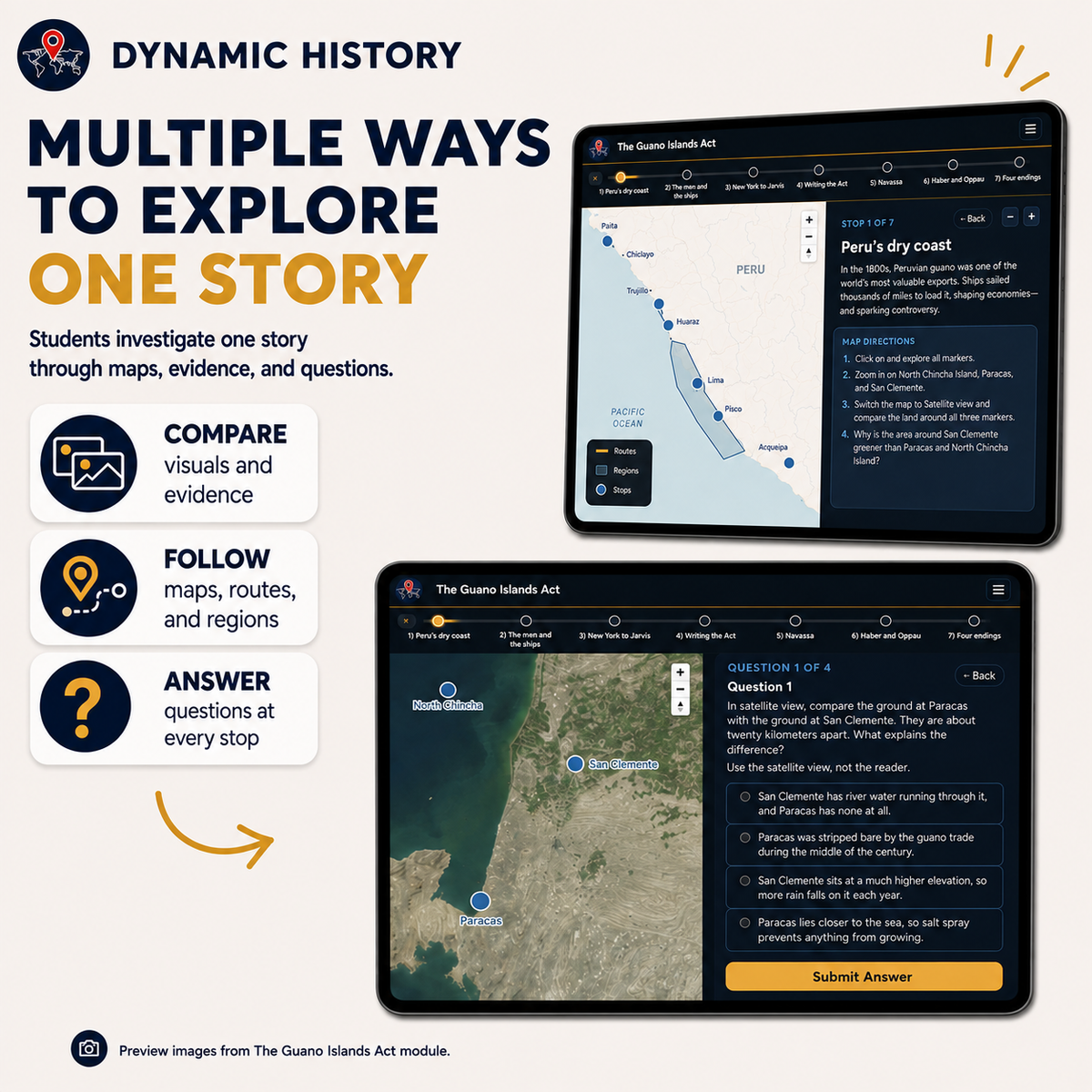
Students work with maps, flood measurements, letters, models, artifacts, and geographic comparisons. The investigation asks what the Nile supplied naturally and what Egyptians still had to measure, build, organize, transport, record, and store for themselves.
Will this meet my classroom's needs?
Try the first lesson for FREE and see how the Dynamic History format works with your students before purchasing.
Want to save 35%?
Get the full seven-lesson bundle here and save 35% compared with purchasing the six paid lessons individually.
What students investigate
- Why the Nile’s northward flow makes Upper Egypt the upstream southern region and Lower Egypt the downstream north
- How the narrow Nile Valley differed from the surrounding desert and how Egyptians still used oases, stone, gold, hunting areas, and trade routes
- Why the annual flood was valuable but variable, using nilometer evidence, the Palermo Stone, and Heqanakht’s letters
- How basin irrigation, labor, measurement, scribes, and granaries turned floodwater into organized agricultural production
- How the river current helped northbound travel while north winds helped sailing boats travel south, and how cataracts limited navigation
- Why successful settlement sites combined water, raised ground, farmland, transport access, storage, and human organization
What's included
- Two-day guided Dynamic History investigation with six historical stops
- Teacher Guide and Answer Key with suggested Day 1 and Day 2 pacing
- Editable digital student worksheet and print student worksheet
- Self-graded Google Forms quiz and multiple-choice print quiz
- Assessment bank with 5 vocabulary terms, 4 two-part short-answer questions, 2 two-part challenge questions, and 15 multiple-choice questions
Flexible classroom use
- Teach the core investigation across two 45-50 minute class periods
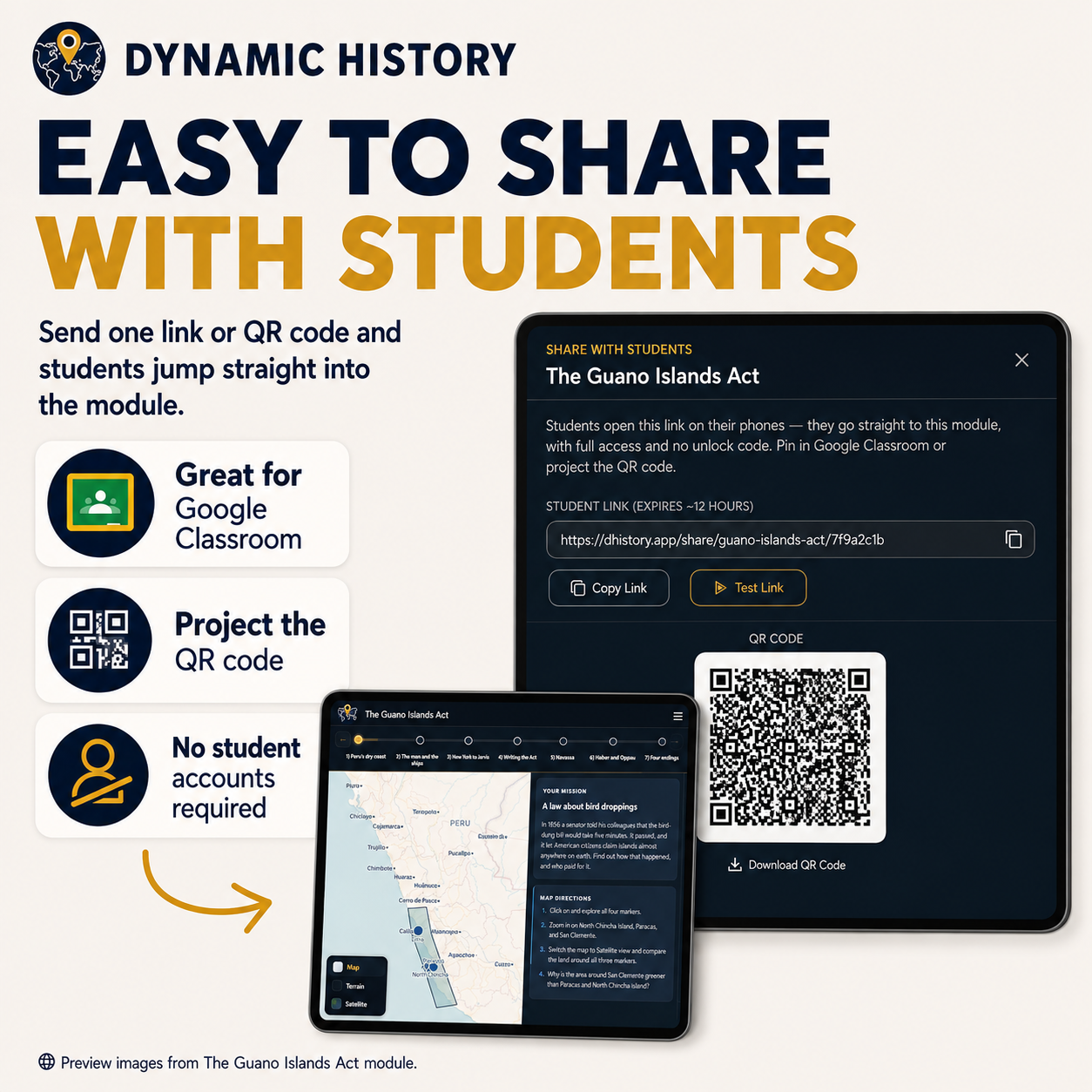
- Use the interactive Dynamic History experience when students have devices
- Use selected written questions for homework, review, or a short check for understanding
- Use the complete assessment as a separate assessment period when desired
Skills addressed
- Using maps, artifacts, written records, and geographic evidence to support historical claims
- Tracing cause and effect between flood conditions, agriculture, transportation, settlement, and organization
- Comparing what different source types reveal about the Nile and Egyptian responses
- Explaining how natural advantages and human choices worked together
- Evaluating a broad historical claim such as Egypt being the river’s gift against multiple kinds of evidence
Standards alignment
CCSS History/Social Studies literacy connections documented in the Teacher Guide include RH.6-8.1, RH.6-8.2, RH.6-8.3, and RH.6-8.7. Written synthesis may support WHST.6-8.9.
Share