

Dynamic History
The Pig War | Dynamic History Module | Grades 9-12
The Pig War | Dynamic History Module | Grades 9-12
Couldn't load pickup availability
Classroom Use at a Glance
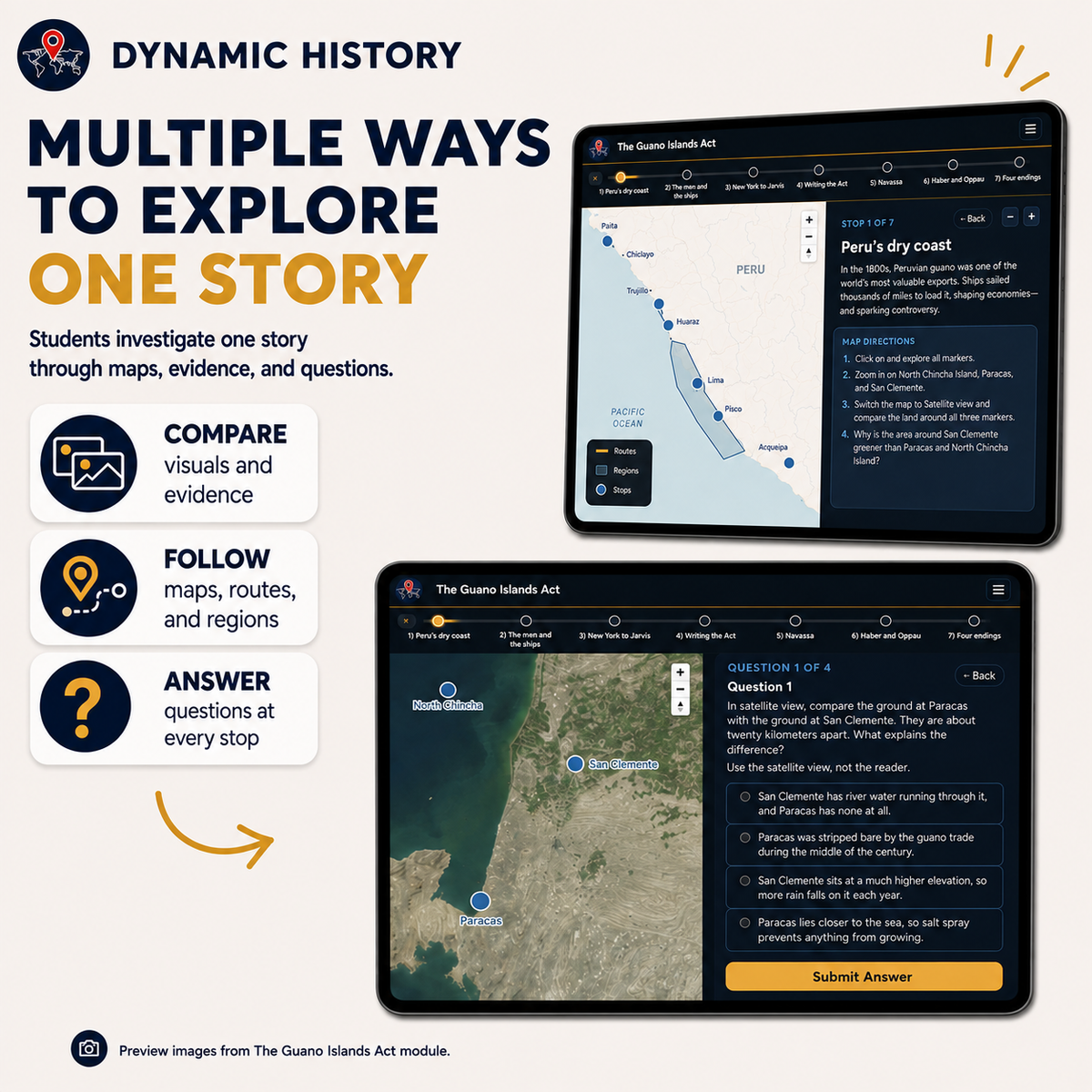
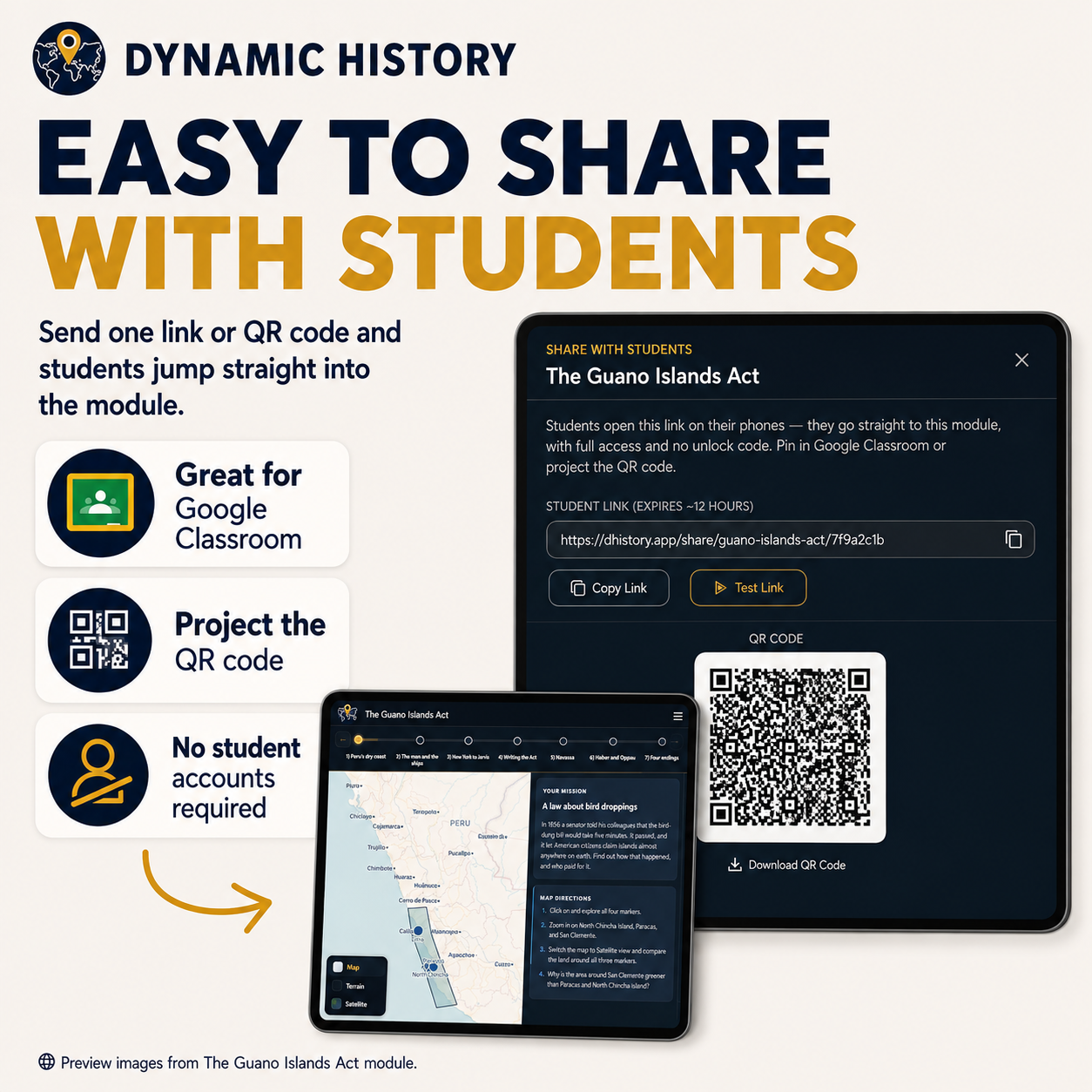
A grades 9-12 two-day Dynamic History lesson on the 1859 Pig War, ideal for Washington State History, Pacific Northwest History, and U.S. History. Students use maps and primary sources to examine the Oregon Treaty, San Juan Islands, jurisdiction, sovereignty, military escalation, restraint, joint occupation, diplomacy, and the 1872 arbitration.
Classroom Uses Whole Class, Small Groups, Content-Area Reading, Discussion, Assessment, Review, Homework, Sub Plan view all
- Whole Class
- Small Groups
- Content-Area Reading
- Discussion
- Assessment
- Review
- Homework
- Sub Plan
Included Teacher Guide, Student Worksheet, Answer Key, Quiz, Google Forms Quiz, Vocabulary, Discussion Questions, Challenge Questions view all
- Teacher Guide
- Student Worksheet
- Answer Key
- Quiz
- Google Forms Quiz
- Vocabulary
- Discussion Questions
- Challenge Questions
Format PDF, DOCX, Google Docs, Google Slides, Google Forms, PowerPoint, ZIP Download, Printable, Editable view all
- DOCX
- Google Docs
- Google Slides
- Google Forms
- PowerPoint
- ZIP Download
- Printable
- Editable
Differentiation Accessible Version, Mixed Reading Levels, ELL Support, Struggling Readers, Vocabulary Support, Small-Group Support view all
- Accessible Version
- Mixed Reading Levels
- ELL Support
- Struggling Readers
- Vocabulary Support
- Small-Group Support
Turn the famous 1859 Pig War into a rigorous two-day investigation of Washington State history, Pacific Northwest geography, treaty ambiguity, jurisdiction, military escalation, diplomacy, and arbitration. Students begin with the 1846 Oregon Treaty and ask why the phrase "the channel" left the water boundary around the San Juan Islands unresolved.
Students use maps and primary-source evidence to separate the pig shooting from the deeper boundary dispute, follow the U.S.-British military buildup, analyze deliberate restraint, and explain why joint occupation managed the crisis while the 1872 arbitration award finally settled the boundary.
What Students Investigate
- How the Oregon Treaty's unnamed water channel allowed Haro and Rosario boundary claims
- Why the San Juan Islands mattered to competing U.S. and British territorial outcomes
- How settlement, land use, taxation, policing, and the Hudson's Bay Company turned map ambiguity into a jurisdiction problem
- Why Lyman Cutlar's pig shooting was the trigger rather than the deeper cause
- How U.S. troop occupation and British naval response escalated the danger without settling sovereignty
- How restraint, joint occupation, the Treaty of Washington, and arbitration prevented war and fixed the boundary
What's Included
- Six-stop Dynamic History investigation designed for two class periods
- Teacher Guide and Answer Key with flexible pacing
- Standard Offline Print Module
- Accessible Offline Print Module with the same core history and evidence at reduced reading complexity
- Editable digital student worksheet and print student worksheet
- Self-grading Google Forms quiz and multiple-choice print quiz
- Vocabulary, short-answer, challenge, and multiple-choice assessment bank
Where This Fits in Your Curriculum
This resource is especially useful for Washington State History and Pacific Northwest History because the entire crisis unfolded around San Juan Island in Washington Territory and grew from competing interpretations of the U.S.-British boundary. It also fits U.S. History units on the Oregon Treaty, territorial expansion, diplomacy, U.S.-British relations, borders, sovereignty, and arbitration. The module includes Coast Salish context so the international dispute is not treated as the beginning of the islands' human history.
Skills Addressed
- Historical cause and effect
- Map and geographic reasoning
- Primary-source and evidence analysis
- Distinguishing what a source supports from what it cannot prove
- Evidence-based discussion and writing
Standards Alignment
CCSS RH.9-10.1, RH.9-10.2, RH.9-10.7, RH.9-10.9; grades 11-12 may use corresponding RH standards; written extensions may support WHST.9-10.1/2/9.
Pair It With the Matching Resource
The Pig War Reader's Theater gives students the same verified history through the other instructional format.
Try Strange True Stories Free
Preview both classroom formats at no cost: FREE Guano Islands Act Dynamic History Module and FREE Guano Act Reader's Theater.
Save With the Full Strange True Stories Bundle
Get all 5 Dynamic History modules + all 5 matching Reader's Theater resources, plus the bundle-exclusive Educator Planning & Implementation Guide. Browse the complete Strange True Stories collection.
Share